
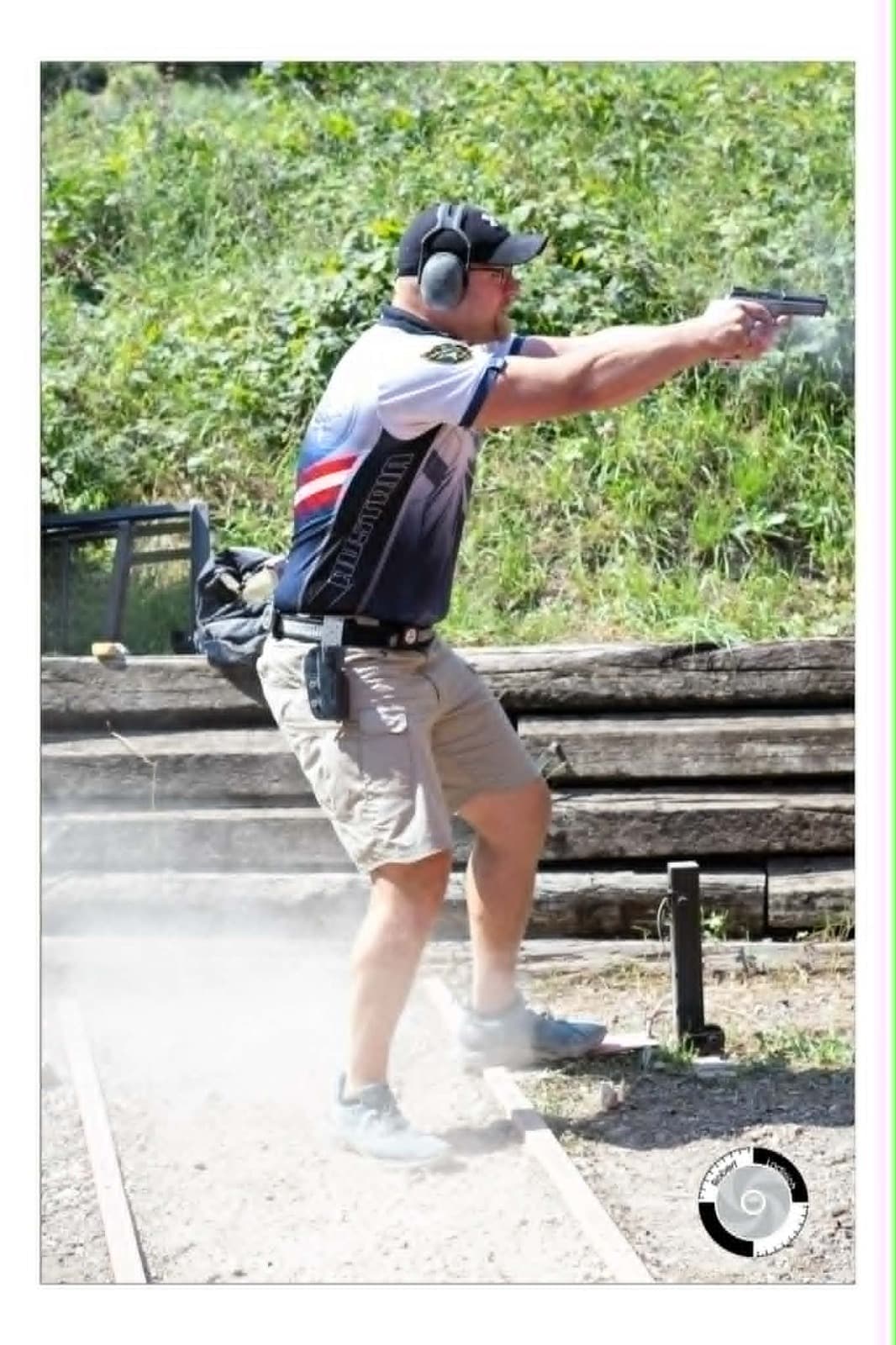
My first training session with Eric Grauffel changed how I train, and it changed how I break a stage down before I ever step to the line. I want to say plainly that I don't think every technique he uses fits every shooter. Some of it works for me. Some of it wouldn't work for someone built differently, or shooting a different division, or coming from a different background in the sport. What stayed with me was the habit of breaking a stage into pieces before the buzzer, not after. I still return to that same habit before big matches, years later, because breaking a stage down early keeps me from reacting to it emotionally once the buzzer goes.
The physical side of this sport gets talked about the most. All of it matters. But mental balance carries more weight than any of that, and it took me eight years of competing to actually understand what that meant instead of repeating it as a phrase. Once it landed, I became a more balanced shooter. My results changed with it. Confidence on its own never fixed a stage for me. Staying present through a plan that didn't go as expected did.
I compete out of Vienna, and I put somewhere near 35,000 rounds a year through my guns between the matches themselves and the practice sessions that get me ready for them. I enter around 25 competitions a year. That volume keeps the strategic side of the sport sharp instead of automatic.
Ask most shooters what separates a good stage from a bad one and they will talk about split times. I watch for something else. Hits, strategy, and composure. A shooter can run a stage fast and still lose it if the hits aren't clean, the strategy falls apart under the buzzer, or composure slips at the wrong moment.
The Myth That Speed Comes Naturally
There's a piece of advice that gets repeated at every club match and every online forum. Take it slow, speed comes naturally. I think that's nonsense. It works the other way for me. Build the stance. Get clean hits. Build technique that holds up under pressure. Then go as fast as you are able to go without breaking any of it.
Take it slow, speed comes naturally. I think that's nonsense.
When people ask me about equipment problems or technique breakdowns on my own runs, the answer is almost always the same. It comes back to fundamentals. That's the cornerstone of everything I train, and it's the first place I look when a run goes wrong, before I look anywhere else. A shooter who blames a bad stage on the gear is usually looking in the wrong direction, and I've made that mistake myself often enough to recognize it in someone else within a few sentences. I'd rather spend a session on the fundamentals than chase a piece of equipment, because that's what carries a stage when the nerves show up.
Every shooter has a ceiling. That's not pessimism, it's how the sport works. You raise that ceiling by putting in time, spending money, or grinding through discipline. Usually, it takes some combination of all three, in different amounts depending on where you are in your career. That's true whether the investment comes as range time, coaching, or simply choosing to show up prepared.
Where I see shooters sabotage themselves is rarely on the equipment table. It's mental instability mid-match, rethinking a plan they already committed to, showing up under-prepared, or pushing speed past the point where they still have control of the gun. The plan usually isn't the problem. The willingness to trust it under pressure is.
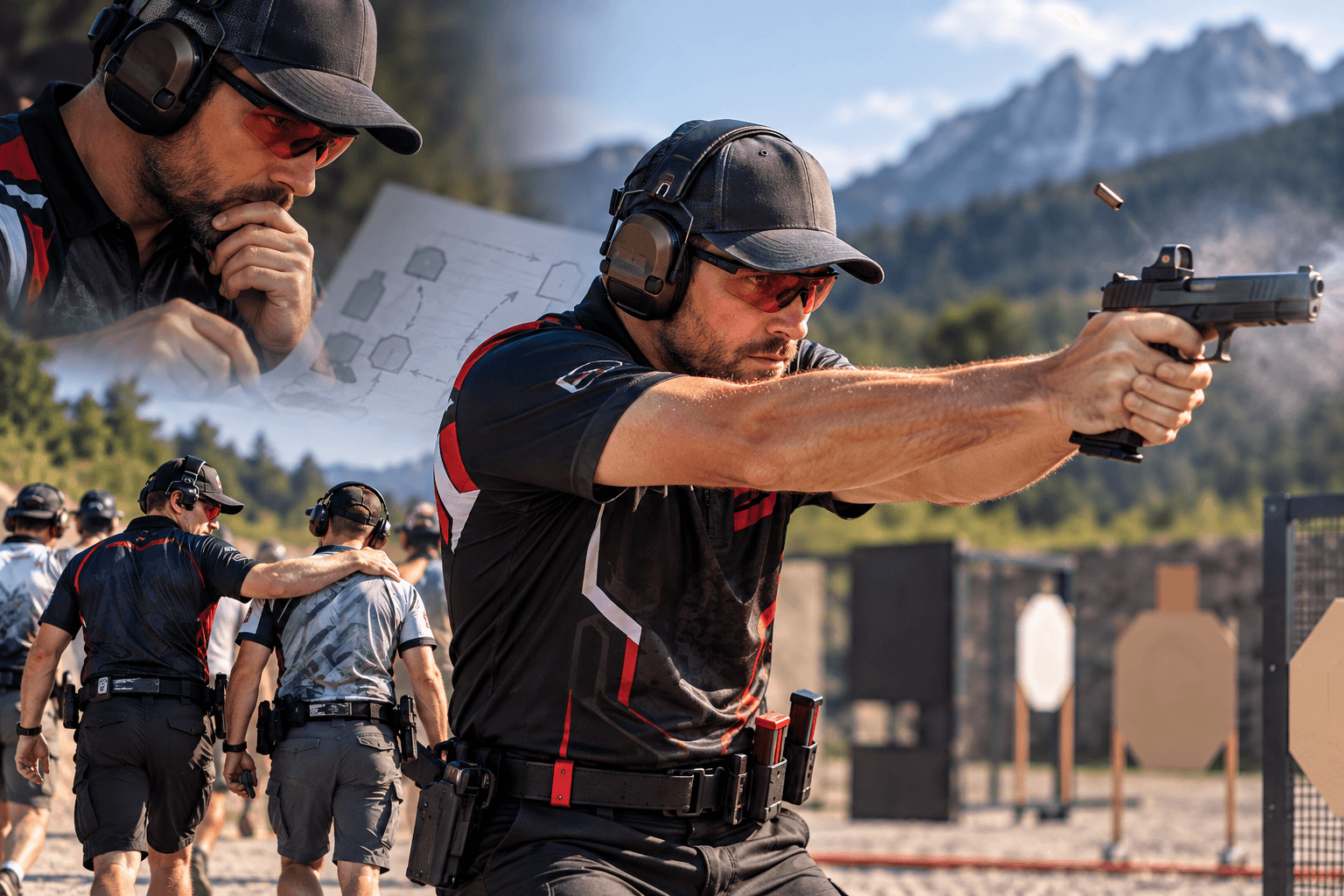
Treating the Field as Partners, Not Opponents
The adjustment that actually moved the needle for me wasn't a drill. I go into a match relaxed now, and I try to have fun with it while I stay focused on my own performance. I stopped keeping score against the other shooters in my head before the match even starts. It sounds simple until you're standing next to a shooter who beat you last time out, and the instinct is to make it personal.
I don't let it become personal anymore. I stopped treating the shooters next to me as opponents. I treat them as partners sharing the same goal, and my job inside that is simple: shoot better than they do on that day.
I stopped treating the shooters next to me as opponents. I treat them as partners sharing the same goal.
I'm not so uptight anymore, and that's really the whole explanation for why it worked. The tension I used to carry into a stage was working against every mechanical thing I had trained. Once that tension came down, the training I had already put in could actually show up on the clock. By my own count, that has added up to thirteen President's Medals and some national titles along the way, though I keep the exact tally more in my head than on paper.
What I tell myself now, before any of that, is to work extremely hard on the fundamentals and keep everything else as simple as possible. No complicated systems. No chasing extra gear or theory. Just that.
I still catch myself slipping back into the old pattern before a big match, running the stage plan over and over until it stops being a plan and starts being a worry. When that happens I go back to the same fix: get relaxed, and remember that the person next to me on the line is working through the same nerves I am.
If a shooter comes to me stuck on a plateau, I tell them to shift down a gear and go back to the basics. Not because basics are exciting. Because that's where the ceiling actually gets raised. It's a harder message to sell than a new grip module or a lighter trigger, and I understand why. Fundamentals don't feel like progress while you're doing them. They only look like progress afterward, on the scoreboard.
That advice applies to me too, not just to the shooters who ask me for it. A shooter chasing speed before the fundamentals are set is chasing a ceiling that was never going to move.
A shooter chasing speed before the fundamentals are set is chasing a ceiling that was never going to move.