
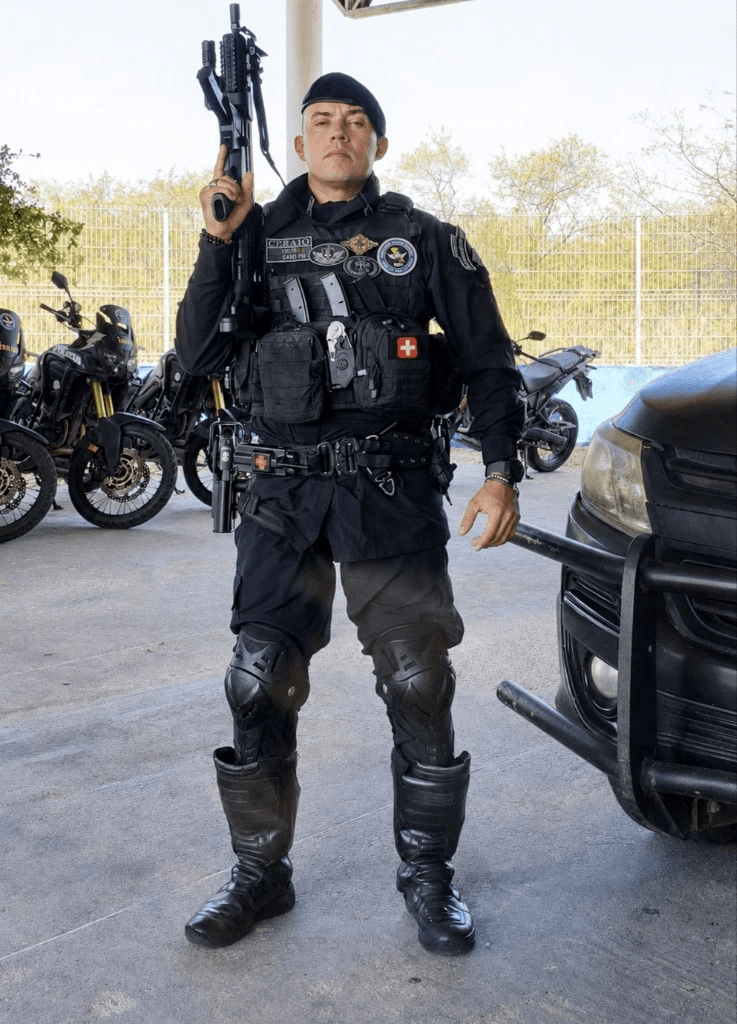
Street policing does not wait for anyone to get comfortable. It moves fast, and it stays unpredictable. A situation can go from calm to critical in seconds, and that is why I believe firearms training should go far beyond marksmanship, speed, or technical weapon handling.
The framework I keep coming back to is the OODA Loop: observe, orient, decide, act. An officer reads the scene, makes sense of what just changed, picks a response, and executes it. Then the cycle starts again immediately, because the situation has already moved on without waiting for a decision. Knowing when to advance, when to disengage, when force is justified, and when restraint is the better call belongs to that same cycle. It is not separate from it. Training that stops at grouping shots on paper teaches the act. It skips everything that has to happen before an officer is even ready to act.
This is not something I picked up from a manual. It comes from recognizing that good performance on a controlled range does not automatically translate into good performance in the field, and that what happens between observing a threat and deciding how to respond matters as much as the technical execution that follows.
WHAT TUNNEL VISION TAKES FIRST
Under real stress, attention narrows. An officer fixed on the most obvious threat can lose the rest of the scene without knowing it is happening. A second subject at the edge of view. A teammate calling out on the radio that goes unheard. An escape route that goes unnoticed. None of it registers, because the brain has already decided where the danger is and stopped looking anywhere else. The incident does not end the moment the first threat is perceived, and training has to teach an officer that. Range performance and field performance are not the same test. On the range, the officer already knows where the target sits, when the drill starts, and what the exercise is asking for. There is no ambiguity to resolve. In a real incident, the officer processes several competing pieces of information while the body runs on adrenaline and the mind narrows right where it most needs to widen.
I do not train the shooting response by itself. I train officers to break that fixation on purpose: reassess, then scan the rest of the scene before the next move. Scenario work does this better than a square-range drill, because it forces the officer to keep functioning after the moment they think the problem is solved. What an officer fails to perceive under stress can matter as much as what he sees.
THE ACCURACY PROBLEM THAT NEVER WAS
I have watched shooters get blamed for bad aim who never had an aim problem. They flinched at the blast. Their grip shifted every time they drew. They hesitated during the draw and presentation because the movement had never become automatic. None of that looks like a grip fault or a flinch to the shooter standing there. It looks like bad aim, so he starts chasing a marksmanship fix for a problem that started somewhere else entirely.
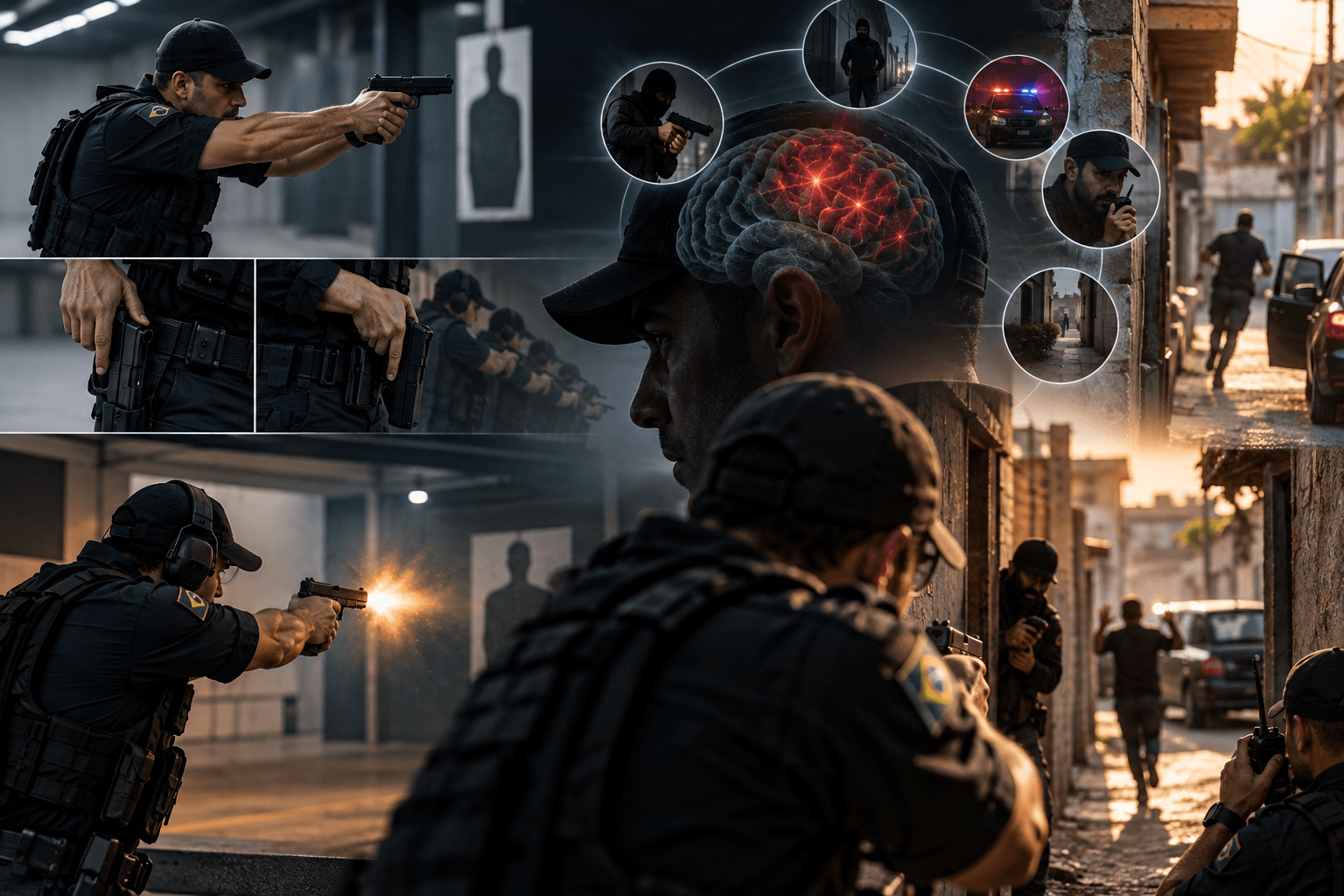
What an officer fails to perceive under stress can matter as much as what he sees.
In a close encounter, an officer rarely gets time to build a slow, deliberate sight picture. The draw, the presentation, the grip, and the trigger press have to already be consistent by the time the decision to fire is made, because there is no room left to think through the mechanics in the moment. Instructors who move too fast toward live fire and qualification scores skip this part.
In my unit, officers entering the 45-day tactical specialization course spend an entire week on dry-fire before they load a single round. Draw, presentation, grip, over and over, without recoil or muzzle blast to distract from what the hands are doing. That week builds a motor pattern that does not need conscious thought later, and that matters because under stress, those same cognitive resources are needed for assessing threats, communicating, and making decisions. Once that pattern holds, live fire adds recoil and noise to something that was already correct instead of trying to fix technique and manage a bang at the same time.
Skip that week and the flaw does not disappear. It waits. Live fire on top of a shaky draw reinforces the flaw instead of correcting it, and the officer walks away thinking he has an accuracy problem when it was really a weapon-familiarity and consistency problem from the start. A shooter reacting to the weapon itself is not the same as a shooter reacting to the target.
What I push for now is a progression, not a bigger round count. Dry-fire builds the motor pattern first. Live fire validates it under recoil and noise. Only after that does training add time pressure, radio traffic, uncertainty, and a scenario that will not resolve the way the officer expects. Add that pressure before the fundamentals hold and training only exposes deficiencies instead of developing the officer. Stress introduced too early does not build anyone. It just shows what was never solid.
A shooter reacting to the weapon itself is not the same as a shooter reacting to the target.
The change I see in officers who go through that sequence is not tighter groups. It is officers who hesitate less on the mechanics and spend that saved attention on deciding whether to act at all. Their hands stop needing supervision. Their eyes come back up faster. Confidence shows up too, but it is a different confidence than the kind that walks in on day one. It comes from knowing the weapon can be handled consistently when fatigue, time pressure, noise, or stress are introduced. The weapon is only one part of the equation. The mind operating it is what ultimately makes the difference. That is why my unit requires an entire week of dry-fire before a single live round is fired. Firearms proficiency is not built by firing more rounds. It is built through a progression of fundamentals, repetition, decision-making, and realistic exposure to stress.
The weapon is only one part of the equation. The mind operating it is what ultimately makes the difference.