

A bodyguard who fires a weapon has already run out of better options. Success on a protective detail is not measured by rounds on target. It is measured by whether the principal walked out of the danger zone untouched, and whether anyone outside the team ever knew there was danger at all.
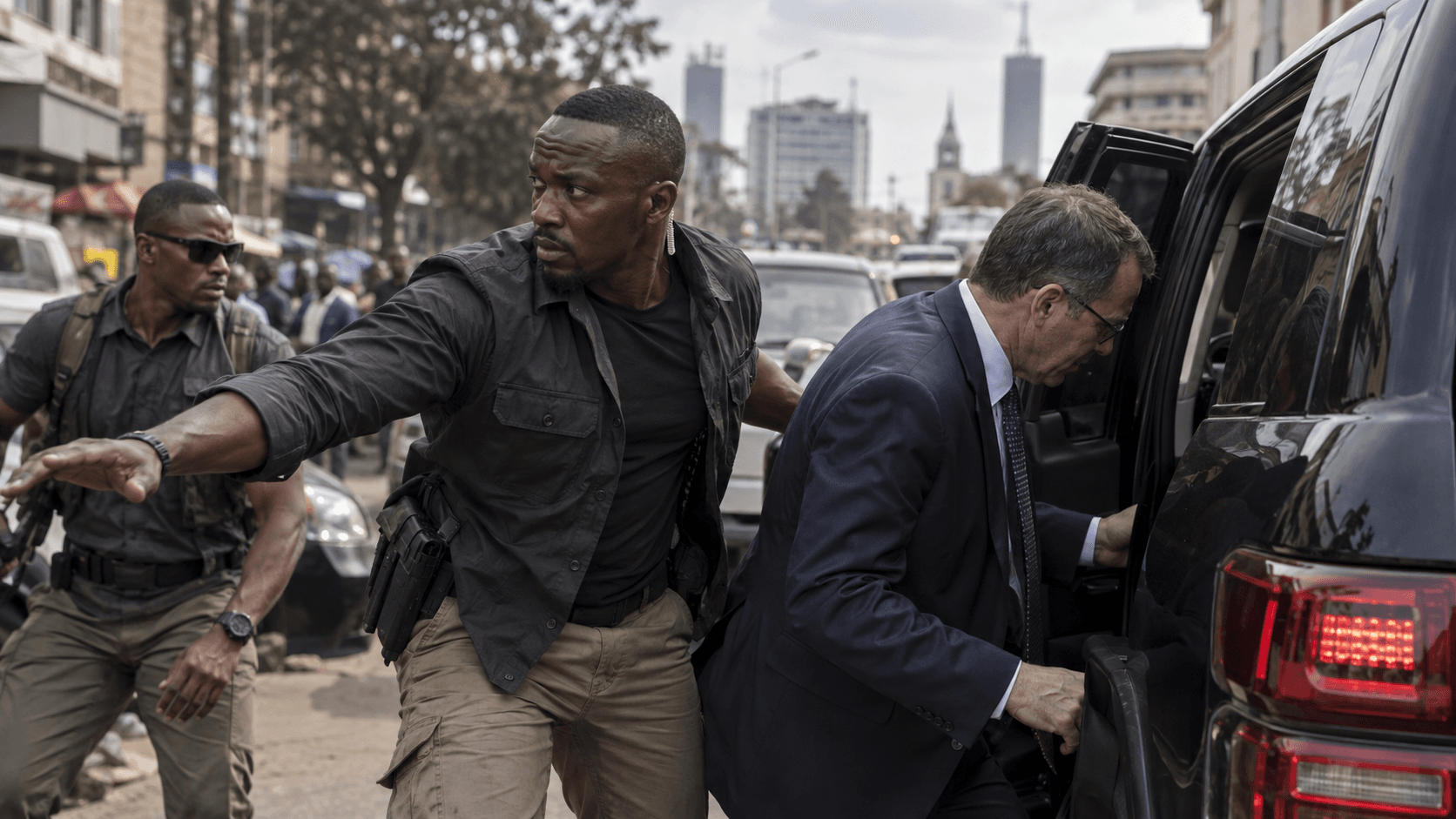
Civilian shooters train for personal survival and for a scorecard. Police officers train to move toward the threat, hold the ground, and make an arrest. A close protection officer does neither. “Firearms usage is strictly a tool to break contact, suppress the threat, and create a window for extraction, not to engage in a prolonged gunfight or neutralize an active shooter unless absolutely unavoidable.” Law enforcement has a legal mandate to neutralize the threat and secure a scene. A protector’s mandate is to leave the scene immediately. That does not mean a protector forced into an unavoidable exchange of fire has failed. It means a fight that runs longer than it has to, or one that could have been avoided by moving the principal sooner, is the failure the job exists to prevent.
Below is how I build protection training around that distinction, from threat assessment through the psychological cost operators pay for the job.
How I Train for the Job
The protection role is defensive from the first second to the last. An operator who forgets that and starts fighting for the fight’s sake has already stopped protecting the principal. I have watched operators default to police instincts under stress, squaring up on a threat instead of moving their principal, because that is the muscle memory their prior training built. Fixing that takes deliberate unlearning, not more range time.
Threat assessment starts with the baseline: the normal flow of people, the noise level, the standard patterns of life in a given environment. Anomaly detection runs in both directions after that. There is what is present that should not be, a person overdressed for the weather, someone lingering with no clear purpose. There is also what is absent that should be there, sudden silence in a market that is normally loud. Operators who only scan for obvious threats often miss the second category, and in my experience it is usually the earlier warning. I remember a detail in a market area in Nairobi where the whole street went quiet within a few minutes, no shouting vendors, no bargaining, nothing. That is not normal for that street at that hour, and it told me more than any single suspicious face could have. I moved the principal off the main route and into a side entrance we had scouted during the advance, calmly, as though it was always the plan. Nothing happened that day. That was the point: the client never knew the route had changed.
Static marksmanship builds a false picture of the job. A protector’s non-dominant hand is almost never free. It is controlling or shielding the principal, which means drawing, firing, reloading, and clearing malfunctions one-handed has to become second nature, not a novelty drill run once a quarter. Operators need to move in reverse or laterally while keeping rounds on target, stabilizing the upper body while the lower body does the work of getting the principal to cover. I run drills where the operator has to physically pivot around the principal, placing their own body between the threat and the client while adjusting their shooting platform on the move. A student who can only do that under ideal range conditions is not ready.
Most academies train aggressive posturing, physical intervention, and command presence. The job demands emotional intelligence, cultural awareness, client diplomacy, and verbal de-escalation more often than it demands force. A protector has to blend into the principal’s world, whether that world is a corporate boardroom or a modest local venue. An over-aggressive operator draws unnecessary attention to the exact person the detail is supposed to keep invisible. A minor verbal exchange with a civilian can turn into a physical altercation or a public relations disaster.
The Human Factor
I develop leadership by handing an operator sole ownership of one phase of a detail, the route survey or the venue advance, and by making them deliver the pre-mission brief to the full team so peers can press them with the what-ifs. My own military background gave me operational discipline and the ability to work inside a chain of command under grueling conditions. It also taught me security as a layered system, logistics, advance work, perimeter control, and coordination, rather than an individual firefight. The instinct to move toward danger and apprehend does not transfer to protection work, and I have to actively retrain it out of operators who come from a military or police background.
An elite protector’s most lethal weapon is not their hands or their firearm. It is their mind.
Technically gifted operators often believe vigilance is something they can switch on when needed. In my experience it is not. Hypervigilance is a biological currency, and the brain runs out of it quickly. On the details I have run, I have often seen detection begin to fall after roughly thirty to forty-five minutes of sustained high-threat scanning, though the point varies by operator. If they are not managing that load through structured scanning rotations and scheduled downtime, their technical skills are already degrading by the time the crisis arrives.
Decision-making gets built before the crisis, not during it. I use the OODA loop, observe, orient, decide, act, to speed up an operator’s read on a situation while disrupting the adversary’s. In medical emergencies I run MARCH PAWS so cognitive overload does not stall the response; the protocol dictates the priority of care so the operator does not have to think about what comes next. I pre-decide as much as possible before a mission starts. “If the vehicle is blocked from the front, then we immediately reverse and execute Route Bravo.” Pre-deciding actions like that removes cognitive load during the actual crisis, so there is less to work out while it is happening.
In the programs I have seen, most curriculum time goes to firearms and physical combat, with medical response treated as an afterthought, even though, on the details I have seen, medical emergencies and road incidents have been more common than armed attacks. Programs also under-serve “meticulous venue advance work, route planning, schedule coordination, and relationship management,” the quiet planning that prevents most incidents in the first place. Operators are routinely trained to apply force without understanding the legal frameworks that govern where they work, and that gap produces excessive force over minor nuisances and legal exposure that follows both the operator and the client long after the detail ends.
Success in close protection is silent by design. There are no high-speed pursuits or dramatic shootouts to point to afterward.
In close protection, success is completely silent. If you do your job perfectly, nothing happens.
The measure of an elite close protection officer is a principal who moves from one location to the next, unaware of the layers of planning, threat assessment, and coordination running quietly underneath the day. Few people outside the team will ever know how thin the margin was on any given day, and that is by design, not by accident. The credit for a day that stayed quiet is invisible, and a protector has to be able to live with that trade.