
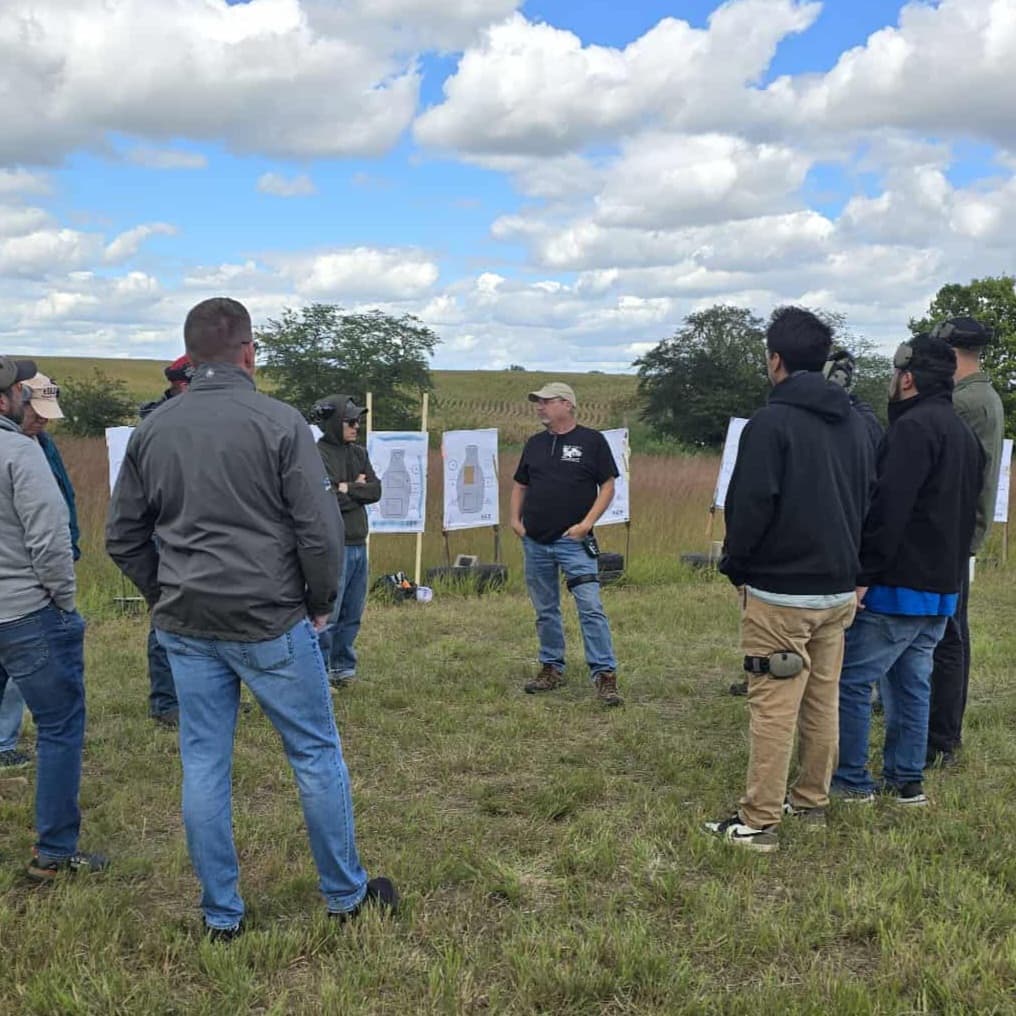
In 2018, Chris Shoffner hosted Craig Douglas of ShivWorks for an ECQC class. He had already been teaching for over a decade. He thought he understood what good coaching looked like. Then he watched Douglas work three straight days of scenarios with a room full of students, and something in his own approach came apart.
“I got to not only witness, but experience the nuanced, professional, expert-level in-roll coaching he provided to all of the students as we worked our way through the various scenarios,” Shoffner says. It was, in his words, a real “eye opener” to see just how effective coaching could be once someone had mastered the craft of it. In his own words, watching Douglas work “definitely forced me to raise my personal standards significantly.”
Nineteen years and more than five thousand students later, that reset still shapes how Shoffner runs a range, breaking a skill down further than most before handing it back to a student. The approach sounds simple until you watch how much a traditional class skips past to get there.
THE QUESTION IS THE COACHING
Ask Shoffner what separates a good instructor from an average one and he doesn't point to a certification. He points to a habit, and to the years it took to earn it. “I now have a pretty good understanding of knowing what questions to ask, rather than falling into the trap of thinking I have to have all of the answers,” he says, framing it as a maturity he's grown into as an instructor rather than something he started out with. Guiding a student through their own problem beats handing them a boiler plate fix, every time.
That habit shows up most clearly around grip. Students walk onto the range convinced they have a trigger problem, or a sight picture problem, or a stance problem. Shoffner has heard all three diagnoses more times than he can count, and more often than not, none of them is the real issue. It really all comes down to the fact that they are allowing their grip to fall apart after the first or second shot. The trigger finger takes the blame for what the grip let go of one or two shots earlier.
The standard fix often produces a slower version of the same undesirable result. An instructor watches a student miss, tells them to slow down, and gets back just that. “Just slow it down is generally not productive advice because it doesn't provide the student with the actual guidance needed to correct the problem,” Shoffner says. Telling someone to slow down without explaining what slow actually means, what it should look like, what it's supposed to feel like, and what it's meant to accomplish, just stretches the mistake out over more time.
Just slow it down is generally not productive advice because it doesn't provide the student with the actual guidance needed to correct the problem.
SIX PIECES, THREE HOURS, ONE DRAWSTROKE
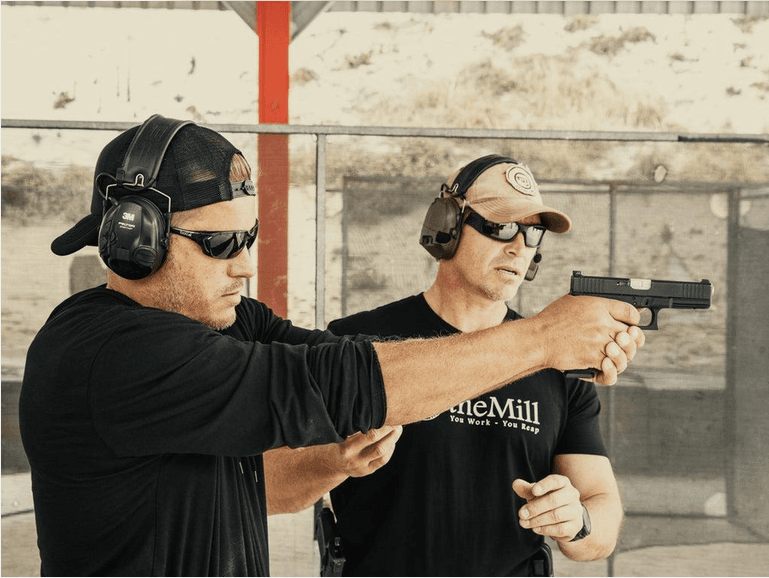
Many concealed-carry programs teach the drawstroke in four or five steps. Grip the gun in the holster. Pull it straight up. Orient the muzzle and collect the support hand. Drive out to extension and fire once target identification is positive. It's a model Shoffner has moved his own program away from.
“There are so many opportunities for improved efficiency during each of these steps that we're passing up if we don't spend the time to break them down,” he says. Shoffner instead runs the drawstroke as six isolated micro drills, covering the entire sequence from first accessing the concealed handgun to properly pressing the trigger, each one working a single piece before the pieces get stitched back together. A group of shooters can spend close to three hours on nothing but those isolated repetitions before the class moves on to anything else.
That's a lot of range time for what looks, on paper, like a warm-up. Shoffner doesn't treat it that way. “These micro drills work because they allow a better psychological understanding of the mechanical processes that must be executed properly in order to achieve consistent, efficient results,” he says. Shoffner describes the repeated work as a way of building the movement until it becomes more consistent and automatic. The improvements he sees out of that three-hour block are, in his words, sometimes almost unbelievable.
The traditional four-step model isn't wrong so much as incomplete. It gets a shooter through the motion. It sends them home leaving efficiency on the table at every step of the sequence, and by extension, leaving effectiveness on the table too.
These micro drills work because they allow a better psychological understanding of the mechanical processes that must be executed properly in order to achieve consistent, efficient results.
The payoff shows up in more than just the mechanics. Shoffner watches confidence and attitude shift alongside consistency once a student starts hitting a higher standard instead of chasing someone else's fix. It's always more fun when a shooter is achieving better results and meeting higher performance standards.
None of that makes grip failure disguised as something else a beginner's problem only. Shoffner sees the same pattern in experienced shooters. He sees it in himself. None of us are immune to skill degradation.
Nineteen years in, his advice to a newer instructor isn't a technique. It's a posture: stay outside your own box. Don't limit yourself to one program or trap yourself inside a dogma. Find instructors worth training under and go get exposure to different programs, different viewpoints, and different ways to “skin the cat.” “You'll organically, methodically distill that knowledge and those skills into what makes you who you are as a trainer,” he says. “Don't ever stop doing that, no matter how long you're in the game.” Being a trainer, in his accounting, is a perpetual education with no arrival point built into it. “You have never, and will never arrive,” he says. “At no point will you know everything you need to know. Keep learning. Keep putting in the work. Be humble.”
You have never, and will never arrive.