
Training For The Job Protection Actually Is
Effective firearms training for a protective role has almost nothing to do with hitting a static target. It has everything to do with decision-making under time compression while another person's life depends on your next move, not just yours. Much standard civilian and law enforcement training solves a different problem: a patrol officer trains to stop a threat to themselves or a bystander, draw, assess, engage, done. That's a single-variable problem, shooter and threat. Protective work adds a second person into every equation. The principal is almost never stationary, almost never cooperative in the tactical sense, and is the actual mission. You're not being trained to win a gunfight. You're being trained to move a person out of a kill zone while retaining the ability to fight if you have to.
That stack looks like this in training. Shooters work on the move, not from a fixed lane, and practice shooting while moving someone else. They train one-handed and off-hand engagement, because the strong hand is frequently occupied controlling or moving the principal. They drill weapon retention and target discrimination close to a crowd, a vehicle, or the principal, where a miss carries consequences standard range training never accounts for. Firearms stop being an isolated skill and become one tool inside a broader response sequence that includes cover-and-evacuate, embus and debus (loading and unloading a vehicle under protective conditions), and formation discipline.
The environment changes the whole model too. Standard qualification happens on a square range: known distance, known target, no ambiguity. Protective firearms training has to live in Simunitions and live-fire scenarios that force real decisions, identifying a threat inside a crowd, discriminating between an aggressive fan and an actual attacker, while the principal is exposed and moving. That's the gap most training never closes. It teaches marksmanship, not judgment under the conditions a protector will actually face.
Threat assessment training starts with a baseline: what's normal for this environment, this crowd, this venue. Then I train the eye to catch deviations from it. That's observation and pattern recognition in practice, not intuition. From there it's prioritization. Not every anomaly matters, so students learn to separate noise from signal and recognize when multiple indicators stack in the same direction versus one isolated oddity. This is the foundation of our Attack Recognition™ program, built around identifying pre-contact indicators before a situation escalates. To measure whether it's sticking, we run scenario-based evaluations where students identify and articulate what they saw and why it mattered, in real time, not a written test. If they can explain it clearly enough that someone else could act on it, that's the benchmark.
Training has to move where the mission moves. If the job is protecting someone in transit, on foot, in a vehicle, through a crowd, the training environment has to include all of it, not a static lane with a paper target. That means movement, vehicle transitions, and realistic crowd density, so students make decisions the way they'll actually have to, while covering ground, tracking a principal, and managing multiple points of attention at once. We build our scenarios around the actual environments our students operate in: venues, motorcades, arrivals and departures, so what they practice looks like what they'll face.
You're not being trained to win a gunfight. You're being trained to move a person out of a kill zone while retaining the ability to fight.
The biggest gap between how protection professionals train and what the job demands is timing. Most programs prepare people to respond after a threat has already declared itself, after a weapon is drawn, after the first move is made. By then you're reacting instead of controlling the situation. The under-served skill is recognizing pre-contact indicators, the cues that show up before an attack, not after. Programs that start the clock too late train people to survive an attack instead of preventing one.
I watched that gap in real time early in building this program. We ran simunition-based evacuation drills where an instructor would draw on students to test their response. Students saw the draw, saw the gun come up, and still waited until the first shot fired before moving. They were reacting to the attack itself, not the moments that preceded it. Once we integrated pre-contact recognition drills into that same program, the response changed completely. Students began intervening at the draw itself, sometimes before the gun was even fully out. It doesn't happen naturally, no matter how skilled the student is. It has to be built.
What It Takes To Do This Work
Sound judgment under pressure isn't something you talk someone into or lecture about in a classroom. It's trained through repetition under realistic stress. We put people under genuine time pressure and ambiguity, then debrief immediately so they see where their decision-making broke down or held up. The goal isn't to eliminate stress. It's to make the response familiar enough that stress doesn't derail it. What transfers is repetition plus honest feedback, not information you can read your way into. You have to build it.
Leadership works the same way. Tactical skill means someone can perform a task. Leadership means making the right call when the plan breaks down and owning the outcome, not just your own performance. I developed leadership in others by giving them real responsibility before they felt ready for it: letting students and junior instructors run teams themselves at the edge of their capability, own the outcome, then debrief honestly on what worked and what didn't. Owning the mistakes my team members make, along with my own, sets a culture where the team executes at a high level without fear of failure.
You can't read your way into good judgment under pressure. You have to build it.
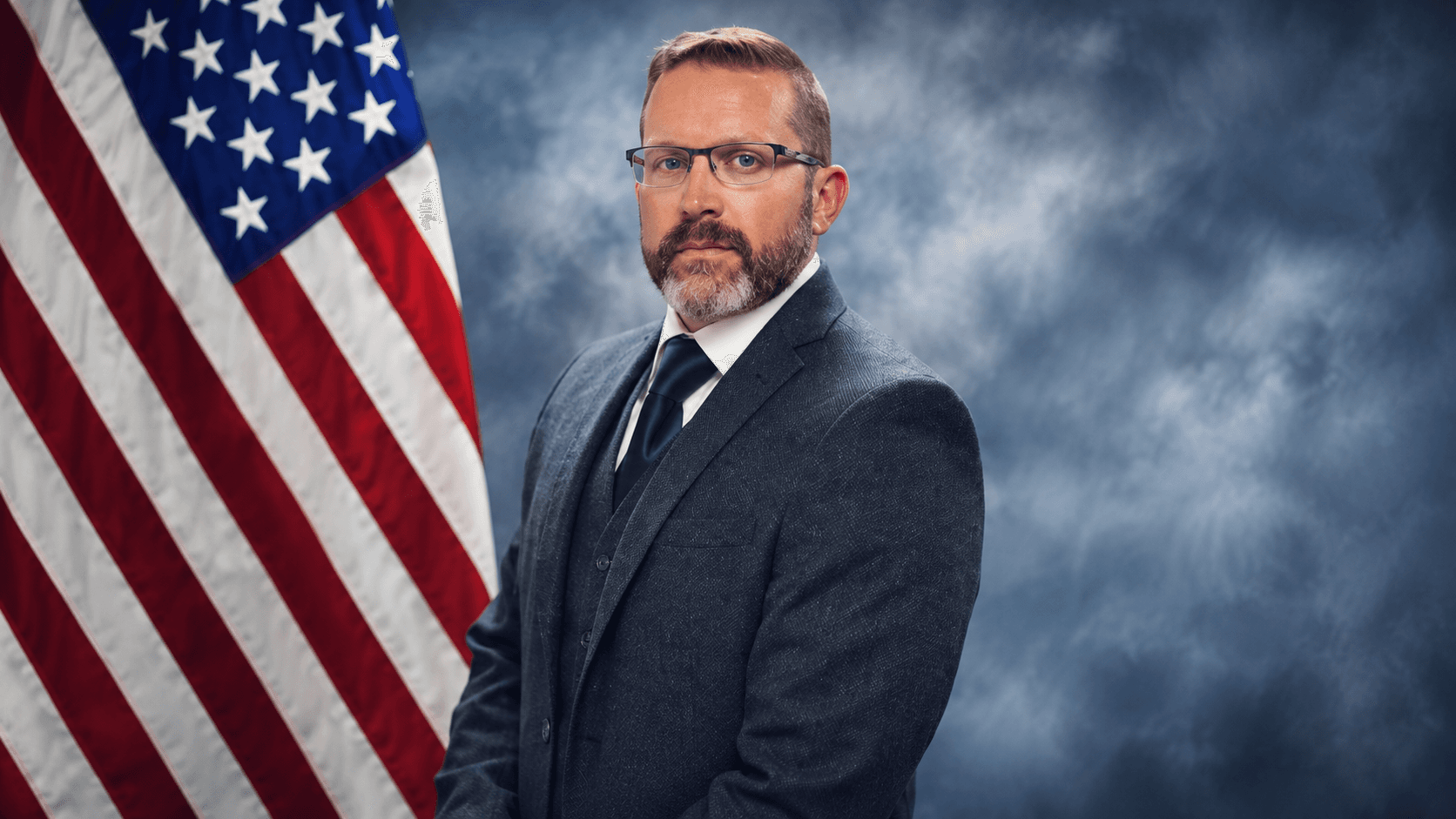
My background isn't military service. It's over thirty years as a law enforcement officer and instructor, training law enforcement, military police, and other DoD personnel. I was responsible for teaching, evaluating, and standardizing how an entire training pipeline approached firearms and threat response, at scale, across changing personnel. What carries over to civilian and protective training is the discipline of standardization: a repeatable, defensible method instead of individual instinct, and training decision-making instead of just marksmanship. Where it has to adapt is the operating environment. Many DoD training environments assume a defined threat picture and rules of engagement. Civilian and protective environments are far more ambiguous, distinguishing a genuine threat from an agitated bystander in a crowd with no uniform, no declared hostile intent, and legal use-of-force standards that differ meaningfully from a military context. That distinction has to be built into the training itself, not assumed away.
Technical skill is visible and easy to take pride in. Sustained vigilance isn't, which is why it gets underestimated. Someone can shoot, drive, and move well, and still fail at the job if they don't grasp the mental cost of staying genuinely present when nothing is happening, because everything can change in a second. I don't argue that point abstractly. I put operators in long-duration, low-stimulus scenarios that suddenly demand a real decision. That reveals, far more honestly than I could tell them, whether their attention actually held or whether they were coasting on competence. The quiet failures, the missed cue, the late reaction, rarely come from a skills gap. They come from someone who stopped actively looking.
The industry over-invests in the skills that look impressive and under-invests in the ones that actually prevent an incident from happening. Firearms, defensive tactics, evasive driving, these are necessary, and they train well because progress is visible and measurable. But they're response skills. They matter after something has already gone wrong. What gets consistently under-trained is the work that keeps things from going wrong in the first place: site and route surveys, and recognizing pre-contact indicators before an attack ever launches. Neither photographs as well as a range day, so both get less time and less investment industry-wide. If I could fix one thing tomorrow, it would be treating advance work and pre-contact recognition as the core of training, not an add-on to the hard skills. The best protection is the incident that never happens, and that's built long before anyone reaches for a weapon or a wheel.
The industry is also too comfortable with one-time training events. A single course, however good, isn't the same as a relationship. Protective work changes as threats, personnel, and environments change, and training has to keep pace with that, not sit on a shelf as something someone completed once. Don't mistake technical proficiency for readiness. The two aren't the same thing, and confusing them is dangerous.
Don't mistake technical proficiency for readiness. The two aren't the same thing, and confusing them is dangerous.