
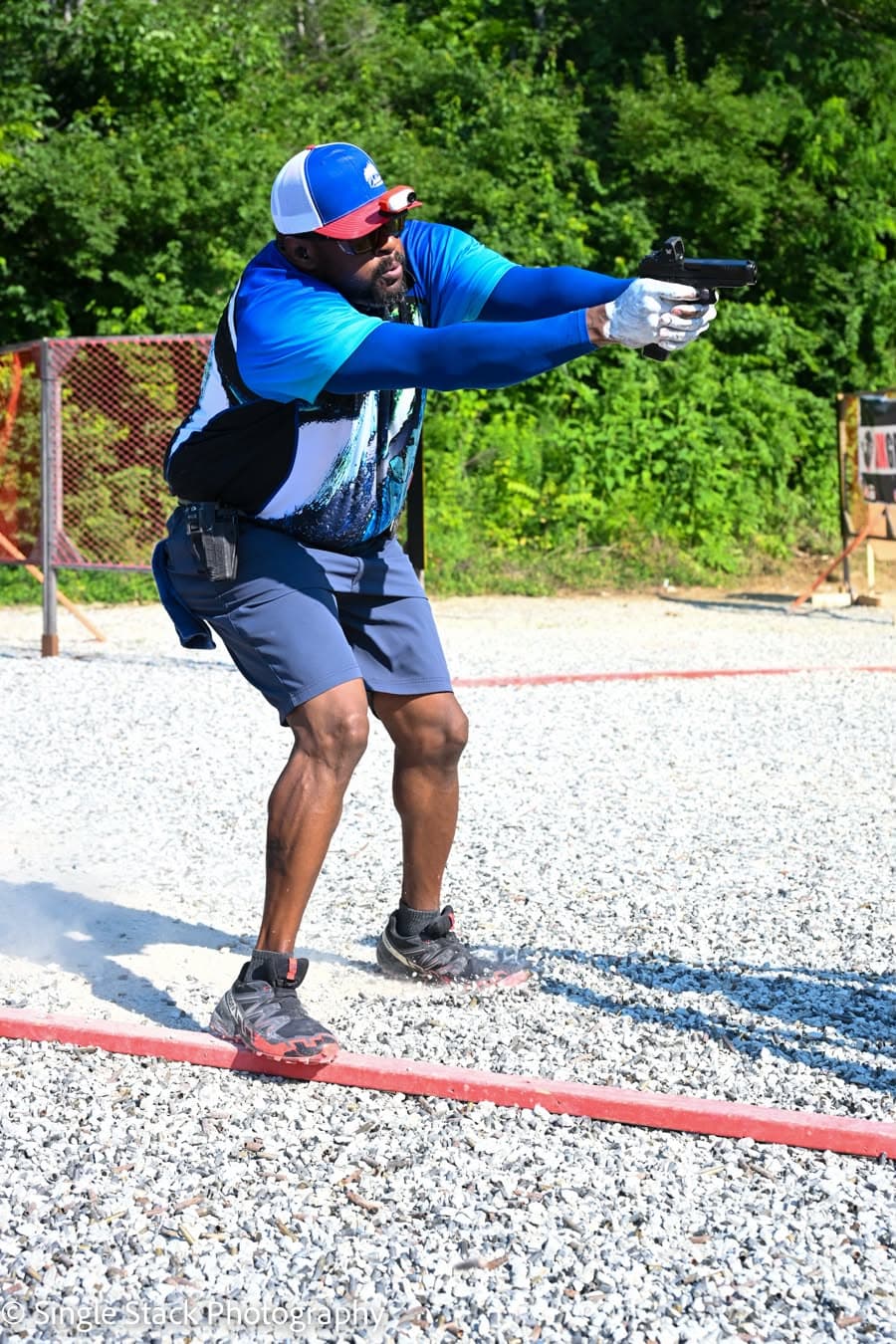
Tom Castro's Level One class rewired how I plan and execute a stage. I did not get it the first time. I sat through it and went right back to shooting the way I always had. A year passed before I took the class again, and that year was rough. I ran matches on instinct, dropped points I never diagnosed, and told myself the problem was speed when speed was never the problem.
The second time through, the same material landed differently, because I already knew what it felt like to fail with it in hand. I needed that failure. Some competitors get a concept the first time it is said to them. I needed a full season of grinding pains before it clicked. It just means I paid for it on a different schedule.
Part of what I had wrong was aggression itself. I had been focused on the wrong things, reading targets and ignoring the stage around them: the walls, the ports. I had convinced myself aggression meant a fast draw and a fast first shot. Aggression has to carry through the beep, through the last round on the last target, and through show clear. A shooter who explodes off the buzzer and softens on the exit gives time back that nobody notices until the printout says so. I was that shooter for longer than I want to admit.
Two Permissions, Not One
The single adjustment that changed the most for me sounds small written down: sights and trigger equal shot and exit. I used to treat the shot as the finish line for a position. It is not. There are two moments that matter, and each one has to earn itself separately. Sights give me permission to pull the trigger. The final trigger break I can call gives me permission to exit.
Sights give me permission to pull the trigger. The final trigger break I can call gives me permission to exit.
A clear sight picture earns the first trigger press. A clean final trigger break, one I can call, earns the movement out of the position. That is not a rule about shot count. It just means the trigger break I can call is what earns the exit, whatever round that turns out to be. Blur that with the shot itself and a shooter either leaves too early on a position they have not finished, or lingers on one they already own. Both cost time. Neither shows up as a technique problem on video. It shows up as a decision problem, made half a second too late or too early.
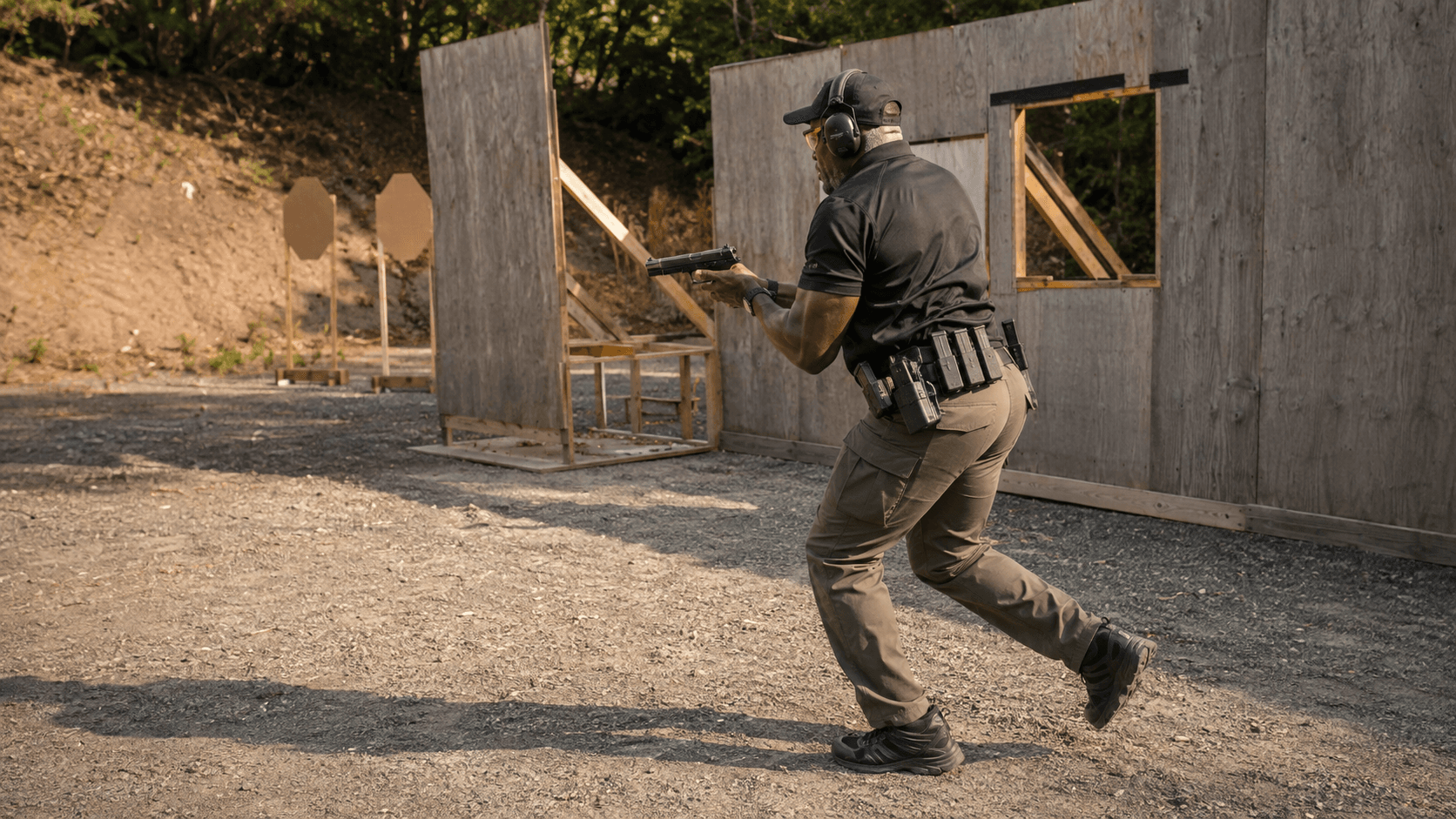
Why Full Send Never Taught Me Anything
A lot of the advice I followed early was simple: send it and see what happens. I tried that version of training for longer than I should have. Untamed aggression, no plan going in, no goal for the run beyond going fast. I burned match fees, ammunition, gas money, and weekends on that approach and came away with nothing I could name. Without a plan before the buzzer and a specific goal for what the run was supposed to prove, speed just repeats whatever habits already exist. It does not correct the sight-and-trigger decisions that actually decide a stage.
The bigger shift had nothing to do with a shot timer. I had to take diet and exercise seriously if I wanted to compete at a level that mattered. I dropped weight and cut soda out completely, and it showed up in a place I did not expect: I stopped losing my grip tension on target six of a six-target stage, when my hands used to start shaking from fatigue before I ever noticed I was tired. A shaking hand cannot call a trigger break cleanly. I found time to dry fire, and more importantly, I drilled individual skills in isolation until they stopped requiring thought. Right now I am at the point where dry fire alone is not enough. I need more live fire to confirm, under real recoil and real speed, that the same sight-and-trigger decisions hold up. None of that is glamorous. It is also where the actual improvement lives, more than any single stage walk-through.
I started competing in 2023, on the GSSF side first, at a match in Kentucky I almost did not shoot. I was new, knew no one on the squad, and nearly left before my first stage. A couple of the other competitors talked me into staying, and that single decision is the reason any of the rest of this happened. From GSSF I moved into USPSA and IDPA. In my busiest season, I estimate that I shot more than fifty matches across those disciplines, though I never kept a precise count. USPSA punishes a stage plan that only accounts for targets. IDPA punishes tunnel vision under a concealment garment. Both disciplines came down to the same two decisions: when to pull the trigger, and when I had earned the exit.
The pattern I see most often in other shooters, and used to see in myself, is a lack of focus. Competitors switch platforms and divisions, chasing a skill instead of building it. Staying on one platform long enough to actually get good at it, before moving to the next thing, is the harder and less exciting path. It is also the one that produces results. The instructor who finally reached me did something the earlier ones had not. The change came with a why and proof it worked, not just an instruction to trust it. Once I had that, everything I was already decent at got sharper, and things I did not even know I was missing started showing up in my scores, my times, and my stage planning.
The change came with a why and proof it worked, not just an instruction to trust it.
I still hear shooters treat speed as the cure for poor stage execution. What changes is whether a shooter is willing to sit through a full year of grinding pains before something finally clicks. Nobody hands that year to you.
You put the year in yourself, or you keep chasing the next platform, the next class, the next explanation that promises to skip it. That part was never optional.