
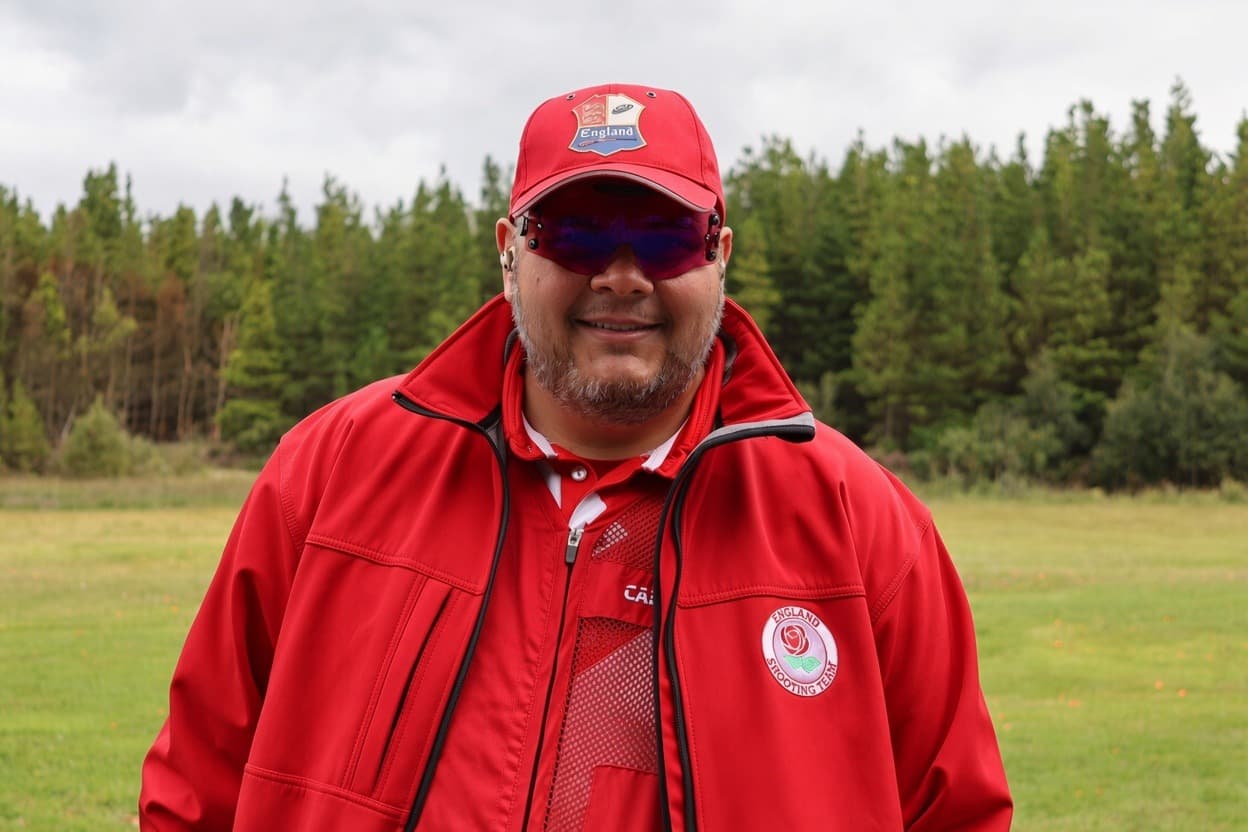
I watched my student, and my friend, shoot his first 50 straight, 97 scored in skeet. I was managing him as much as shooting myself by that point, reminding him to calm down for the last couple of rounds. Not to miss high one. Take your time. Breathe. He finished only two points off me by the end of the round. All cylinders were firing for him, and the elation from finishing was as much relief that it was over as anything else. All the drills and work we'd put in paid off for him that day.
Most people under-analyze things. I probably over-analyze them. But a lot of instructors don't like to think outside the box when it comes to method or style. I'd rather set people up for tough challenges, reverse skeet pairs or sim pairs that aren't designed to be, to up the ante while still having fun, because most competitive shooters and instructors forget that this is supposed to be fun first and foremost. Stop being so serious.
The Eyes Give It Away Before the Gun Does
One thing I see is the dominant eye becoming strained and the non-dominant eye beginning to take over without the shooter realizing it. That shows up as missing up the side on going-away birds, even from a shooter who's competent, who knows what to do and how to do it properly. Looking over their shoulder, I can often see what's happened before they can. The shooter is utterly unaware their eyes have gone until they're missing for reasons they can't explain.
That's the fundamental issue, and it always will be: looking at the target properly. It's the most transferable skill there is. How you get the gun in front of the target is entirely up to you, method-dependent if you're that way inclined, but the transition from soft focus to hard focus as you track the clay is the number one part of the game. You need to look at the target like it owes you money, not into the space in front of it, not the bead, not where you think it's going to be. The target is everything. You zone in on it and your brain feels the hole. You shoot the string into it. All of that comes from the eyes seeing properly first.
You need to look at the target like it owes you money, not into the space in front of it, not the bead, not where you think it's going to be. The target is everything.
In my experience, A-class shooters look at the bird. B and C class often don't. They fixate on the bead or on the lead. Tell them to look at the target and they'll swear, hand on heart, that they are. But they're doing it with the corner of the eye, not the middle of it, and they won't know the difference between the two until they've built the skill to actually track a bird from tower to tower.
Teach the Eyes Before You Teach the Gun
I have a student who was taught classical swing-through and pull-away, and he could not, for the life of him, do it in registered skeet. He kept defaulting to a diminishing lead until I explained 10/90 or 90/10: the swing is either 90 percent for swing-through or the last 10 percent for pull-away. Crap in, crap out. He couldn't understand his foot position changing between houses. A few instructors tried before me. Eventually it clicked, though every now and then he'll still default back to his old settings.
Rabbits are where I see this most. I tell people to shoot six inches behind them, to slow down and actually learn to track them. Most people, him included, swing through a rabbit and miss in front without ever knowing why they missed or where. I try to get people to live in slices of time, to stretch the moment out as long as they can afford to by actually looking at the bird.
Live in slices of time. Stretch the moment out as long as you can afford to by actually looking at the bird.
Start by teaching without a gun in the hand. Put it in the rack. Look at the bird and diagnose it. Teach the student where to see it cleanly, as a smear into the clear, when soft focus turns to hard focus, and when they're actually going to pull the trigger. If you can do all of that without the gun in their face first, they can break the bird once it's in their shoulder. We have two eyes for a reason. Use both.
His skeet improved after that, but his sporting clays improved even more because of it. Rabbits, which he used to hate, he now takes a side-by-side or a .410 out just to shoot for the fun of it. When he misses one now in sporting, it annoys him, because he has them down so well from where he used to be.
There's a lot of old wives' tales in this sport, and a lot of old mentality holding back how the game actually gets played now. Don't react on the flash. Wait for the bird. Look at it intently, and look at the break fully.
That last part matters. Follow through with the end of it. Shoot like you mean it. In the immortal words of Sheldon Philo: now do it properly.
Now do it properly.