
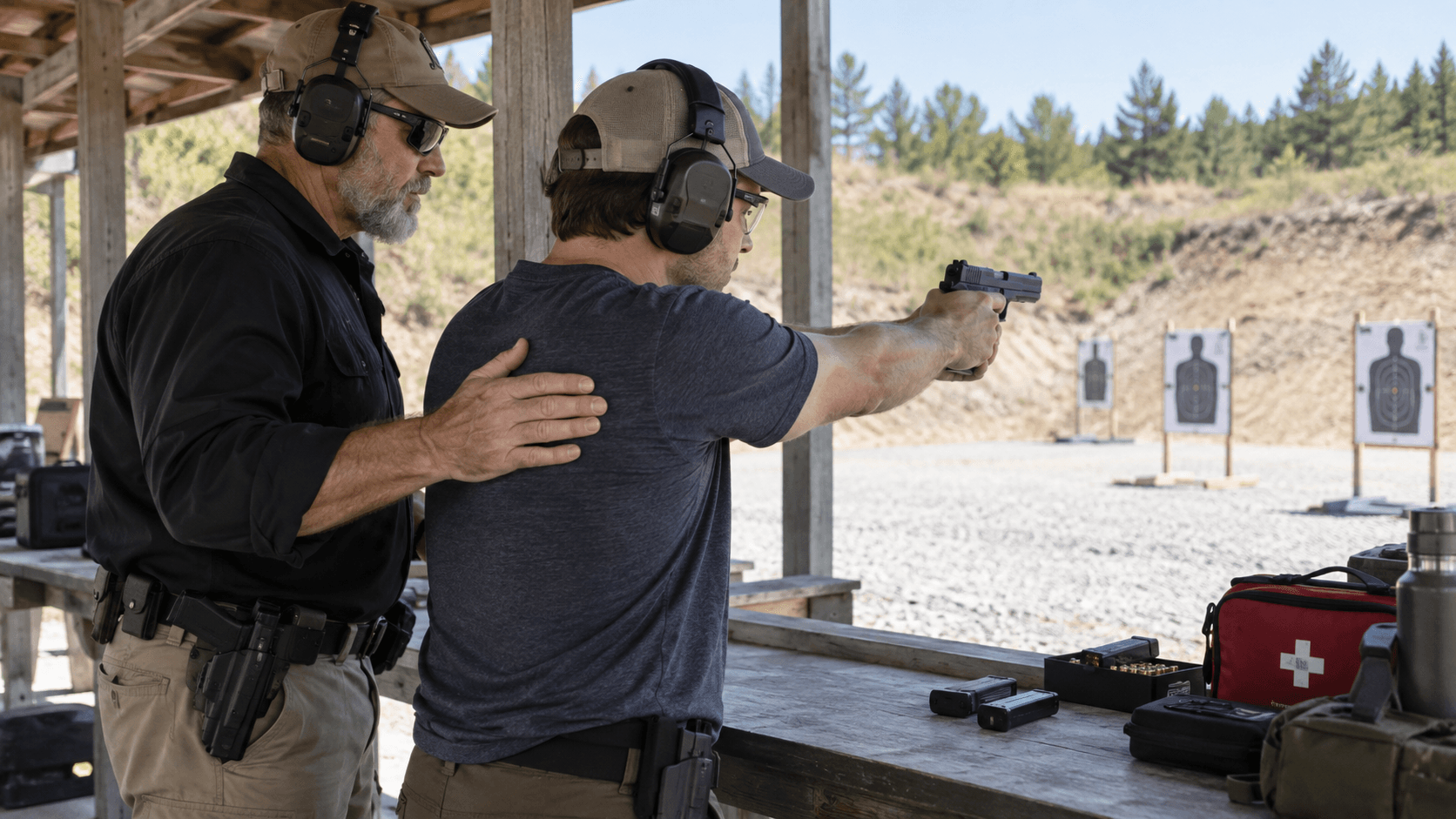
My work sits at the intersection of firearms instruction, firearms training, and first aid fundamentals. I didn't arrive here through a single defining moment. It was a gradual pull toward responsibility, competence, and the desire to help people become safer and more capable. I started like many shooters do: curious, inexperienced, and determined to understand what "good" looks like. Over time, that curiosity turned into a commitment to professional development, and eventually into a career focused on teaching others.
That career now runs through Tactical K Training and Firearms, where I own the firearms sales and service business, gunsmith shop, and outdoor range. The shop carries roughly four hundred firearms in stock, and the operation includes a 125-yard outdoor range. I hold certifications across concealed carry, home defense, countering the mass shooter, marksmanship coaching, women and handguns, children and firearms, real estate safety, range safety, First Aid Fundamentals Instructor, and CPR/Defibrillator Certified Instructor, and I serve as an ERT captain. Those roles keep bringing me back to one conclusion: advanced techniques only matter when the fundamentals underneath them are sound.
People Want Skills Without Foundations
One challenge I see across shooters, instructors, and firearms professionals is the tendency to chase advanced techniques before mastering the basics. Everyone wants to run before they can walk. They want speed without consistency, complexity without discipline, and confidence without competence. The truth is that fundamentals aren't just the starting point. They're the backbone of everything we do. When shooters struggle, it's almost always because something foundational was skipped or never truly understood.
Advanced performance does not replace fundamentals. It exposes them. Speed can make a good habit more efficient, but it can also make a bad habit happen faster. More complicated drills can test ability, but complexity does not correct an unstable base. If safe handling, repeatable mechanics, awareness, and disciplined decision-making are not already present, adding pressure simply gives weaknesses more opportunities to appear.
For that reason, I don't see slowing down as a step backward. Slowing down is often how a shooter learns what is actually happening. It gives you room to recognize an inconsistency, understand it, and repeat the correct process until it becomes dependable. The goal is not to remain slow. The goal is to build something that can eventually be performed with confidence without sacrificing control.
Pressure Reveals What Practice Built
The most important lesson I've learned is that training is not about performing well when everything is going well. It's about performing acceptably when everything is going wrong. I've seen how stress, confusion, and real-world variables can strip away the illusion of skill. That realization pushed me to build training that is honest, pressure-tested, and grounded in reality. My job isn't to impress people. It's to prepare them.
A clean repetition in a comfortable environment can be useful, but it is not the final test. Training should create habits strong enough to survive distraction, uncertainty, and pressure. That does not mean every session has to be complicated or stressful. It means the fundamentals have to be reliable enough that when conditions become less comfortable, the shooter still has something dependable to fall back on.
Confidence should come from demonstrated competence, not from how advanced a drill looks. A person who performs the fundamentals safely and consistently has a base that can be built on. Good instruction should help people discover weaknesses in training, where those weaknesses can be addressed, rather than allowing them to stay hidden.
Training is not about performing well when everything is going well. It's about performing acceptably when everything is going wrong.
If You Want to Improve, Slow Down
If you want to get better, start by slowing down. Build deliberate habits. Seek instruction that challenges your assumptions instead of validating them. Don't just train the fun stuff. Train the skills that save lives: safe gun handling, situational awareness, medical fundamentals, and decision-making under stress. Improvement isn't glamorous. It's repetition, reflection, and humility.
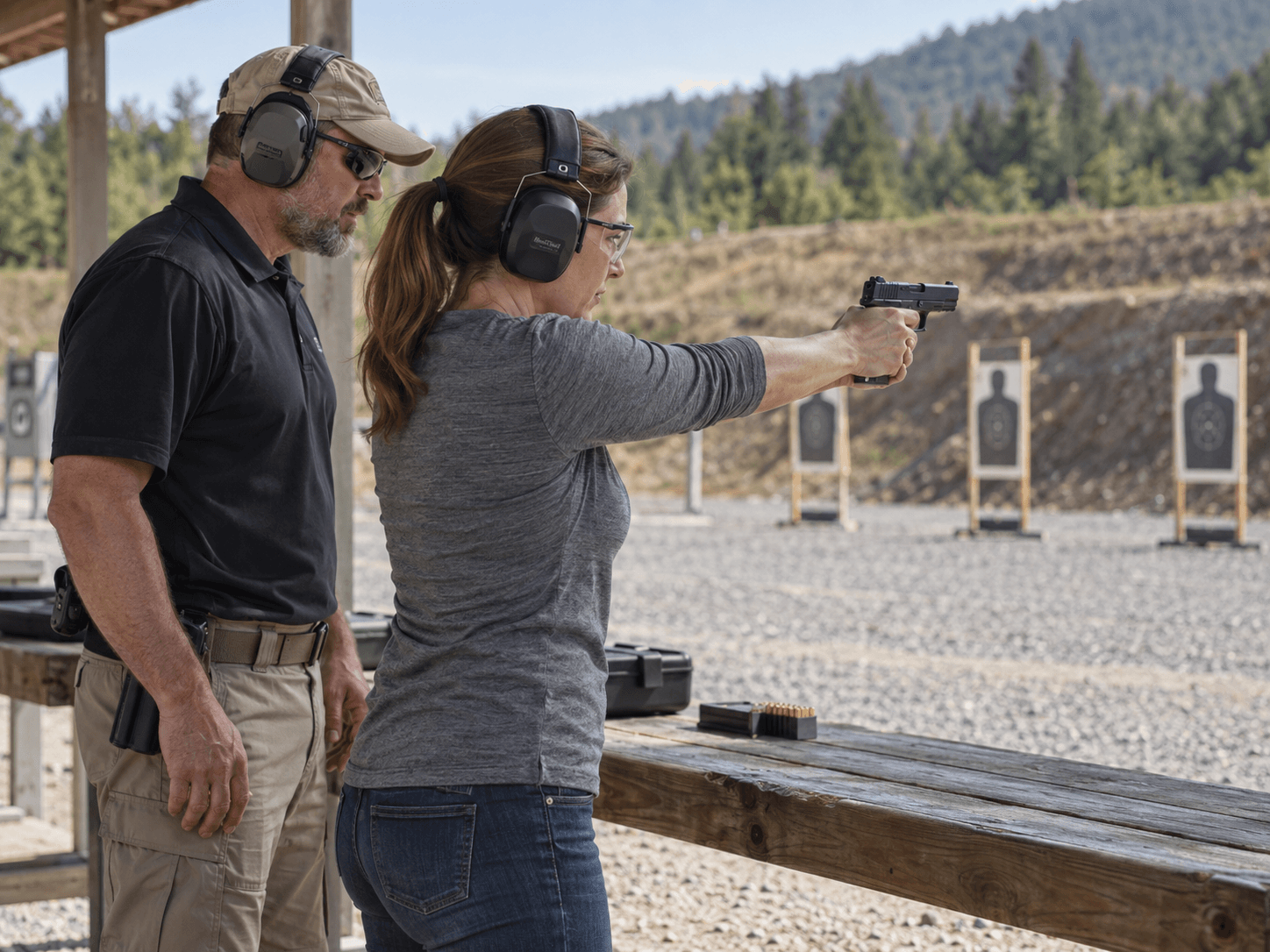
Humility matters because experience does not eliminate the need to revisit basics. Improvement requires being willing to recognize a weak area and work on it instead of moving past it. The same principle applies to instructors. Teaching should not become an exercise in showing students how much the instructor knows. The responsibility is to give students a foundation they can actually use. Sometimes that means resisting the temptation to move ahead simply because an advanced technique is more exciting.
Calm Is the Goal, Not Aggression
One misconception I see constantly is the belief that firearms training is about becoming more aggressive or more tactical. Good training makes people calmer, safer, and more thoughtful. It's not about preparing for a fight. It's about preventing one. The best shooters I know are the least interested in conflict. They train because they value responsibility, not bravado.
For me, that is an important measure of mature training. Technical skill is only one part of competence. Judgment, awareness, and restraint matter too. The more capable someone becomes, the more deliberate that person should be about how and when those skills are used.
That is also why medical fundamentals belong in the same conversation. Being prepared does not end with marksmanship. I believe medical skills will increasingly become as standard a part of responsible training as shooting skills themselves. The goal is broader competence, not simply better shooting.
It's not about preparing for a fight. It's about preventing one.
The Future Will Be More Measurable
The firearms community is changing quickly, and three trends stand out to me: a shift toward evidence-based training rather than tradition or ego, a growing emphasis on medical skills, and technology-driven training tools, from dry-fire systems to data-driven diagnostics. I believe those trends will raise the bar for what "good" looks like.
The common thread is accountability. Evidence-based training asks whether a method actually produces the result we think it does. Medical training expands the definition of preparedness. Technology can give shooters and instructors more objective information about performance instead of relying only on feel or memory. Used well, those tools do not replace an instructor or the fundamentals. They can make weaknesses easier to see and progress easier to evaluate.
That is a healthy direction for the community. Better measurement can encourage better questions. Instead of asking whether a drill looked fast or felt good, we can ask whether performance was safe, repeatable, and improving. These changes can push the community toward higher standards, better accountability, and more accessible education.
If there's one thing I want readers to take away, it's this: competence is a choice. You don't become skilled by accident. You become skilled by deciding that safety, responsibility, and continuous improvement matter more than convenience or ego. Whether you're a new shooter or a seasoned professional, the work never stops.
The goal is not to look advanced. The goal is to become dependable. Choose the fundamentals. Choose the work. Choose to keep learning.
Competence is a choice. You don't become skilled by accident.