
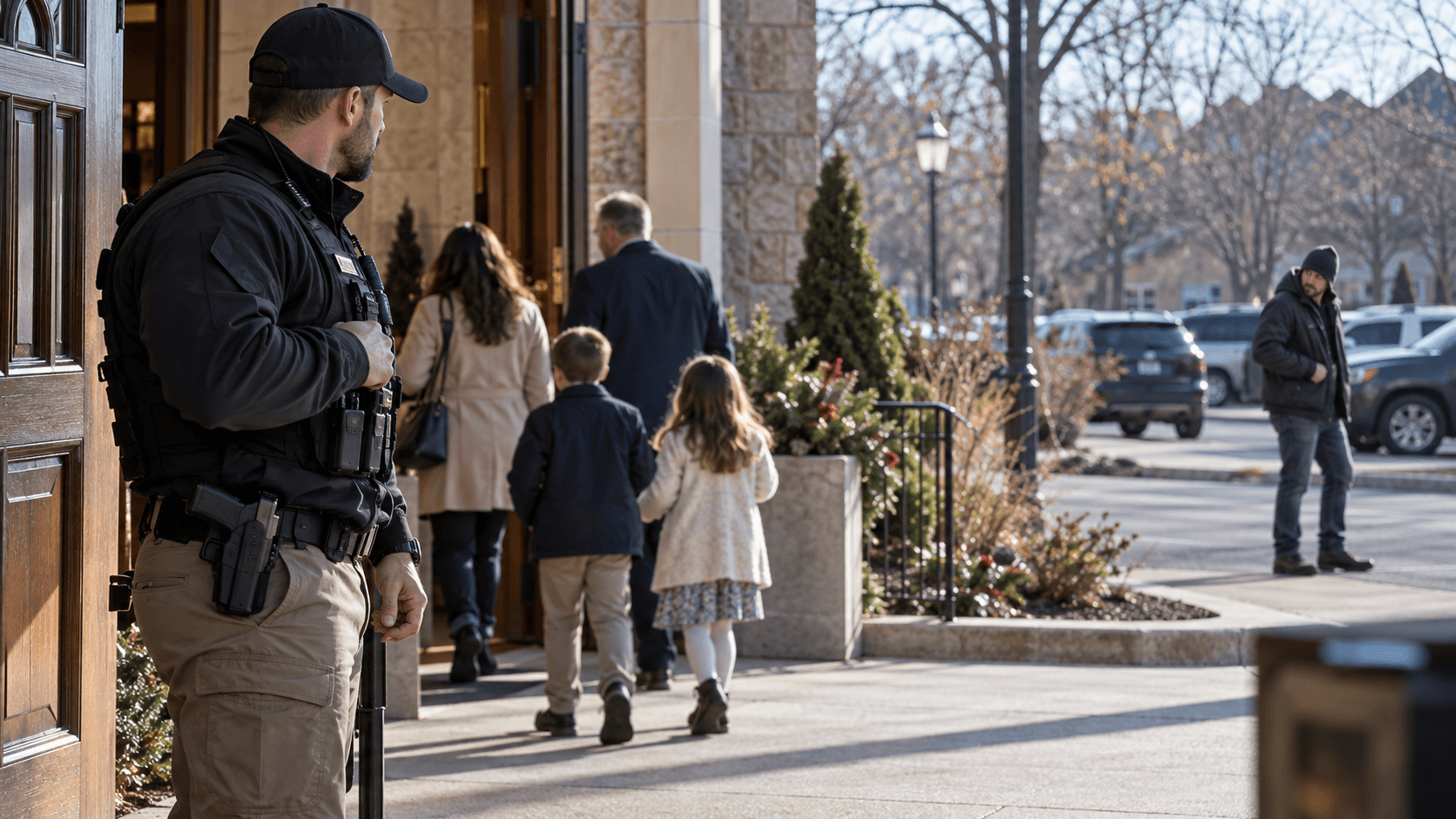
In two decades of training armed professionals, I've heard some version of this story more times than I can count. A security officer posted outside a synagogue noticed a man lingering across the street before services began. It wasn't just his presence that mattered, it was his behavior: scanning the entrance instead of his phone, pacing in short agitated bursts, clenching and unclenching his fists, adjusting an oversized jacket in warm weather, fixating on arriving families instead of the building itself. As more worshippers approached, his breathing turned visibly rapid and his movements grew more deliberate.
The officer read the cluster of pre-assault indicators instead of writing them off as nerves. He alerted law enforcement, repositioned to put distance between the suspect and the entrance, and quietly rerouted congregants through a side door. Officers arrived within minutes and detained the man before he could act. They recovered a weapon. No shots were fired. No one was hurt. Most of the people who walked through those doors that day never knew how close they had come. That's the pattern I want officers to understand: the best security outcomes are usually invisible, built on disciplined observation and decisive action long before anyone reaches for a weapon.
Law enforcement training has always centered on firearms, defensive tactics, physical conditioning, legal instruction, emergency driving, and emergency medical care. Those disciplines matter and always will. But I still see one of the most consequential parts of officer survival get the least attention in most academies and in-service programs: behavioral threat recognition. Departments spend plenty of time teaching officers how to respond to violence. Far less time goes into teaching them how to recognize the behavior that precedes it. That gap matters, because the outcome of a confrontation often has less to do with an officer's tactics in the moment and more to do with whether they saw the threat coming. I put observation on the same level as firearms proficiency and tactical decision-making. Not a soft skill. A foundational one.
Most people assume violent encounters come out of nowhere. In my experience, and in the behavioral science and case studies I've studied over the years, that's rarely true. No single behavior predicts violent intent on its own, but people preparing to commit an assault tend to display clusters of behavior that stand out once you know what to look for: heightened vigilance, changes in body positioning, repetitive self-touching, scanning the environment, target fixation, concealment behavior, altered movement patterns. None of that lets an officer predict the future. What it does is tell them when to pay closer attention and slow their decision-making down. Behavioral threat recognition isn't predictive policing. It's informed observation.
Behavioral threat recognition isn't predictive policing. It's informed observation.
Reading the Baseline
Every environment has a behavioral baseline. Shopping centers, transit hubs, schools, houses of worship, government buildings, and public gatherings all have their own predictable rhythm. Most people move through a space with purpose and interact with it the way you'd expect. Reading a scene starts with knowing what normal looks like there, then watching for the people who don't fit it. Deviation from the baseline doesn't mean criminal intent. It means the behavior is worth a second look.
Human communication is mostly nonverbal. Posture, movement, gaze, hand placement, and interpersonal distance tell you as much about someone's intent as anything they say. Officers with years on the street often describe a gut sense that something's wrong. I don't think that's instinct in the way people mean it. It's pattern recognition, built from thousands of hours of watching people, that hasn't been made conscious yet. Good training turns that unconscious read into something an officer can name, explain, and act on. The indicators I train officers to watch for include:
● Repeated touching or adjusting of the waistband or a concealed area
● Blading the body to hide one side from view
● Unusual rigidity or tension in posture
● Persistent scanning of entrances, exits, or responding officers
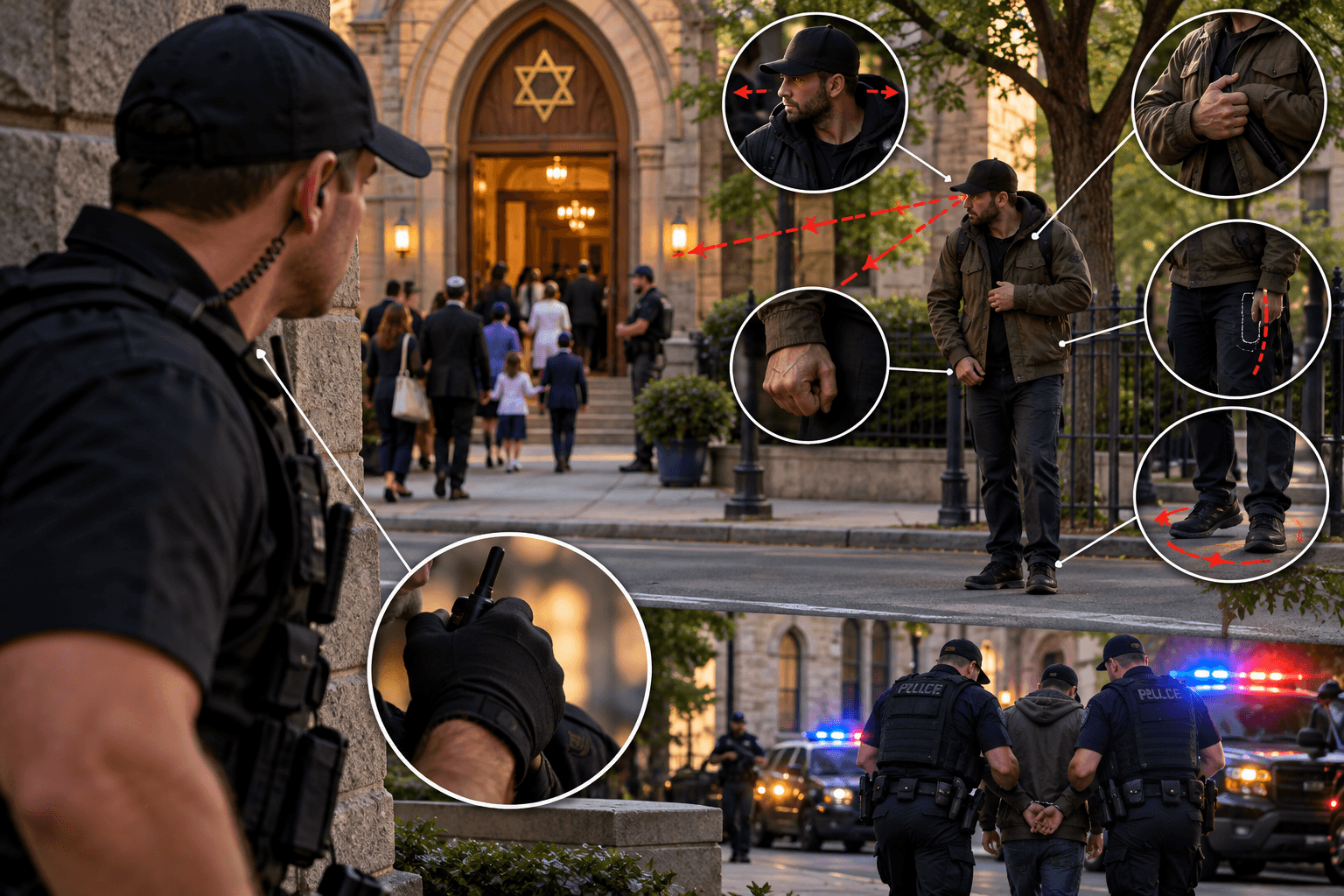
● Target fixation
● Nervousness that's disproportionate, or calm that's unusually flat, given the situation
● Protective movements around a concealed object
● An unnatural gait or restricted movement consistent with something being carried
Hands matter most. Most assaults on officers start with movement of the hands, whether someone's reaching for a weapon, producing an improvised one, or starting a physical attack. Eyes matter almost as much: watch for scanning, repeated glances at potential targets, checking escape routes, or tracking responding officers. Concealed weapons change how people move, even when they don't realize it. Someone carrying will often protect that side of their body, adjust their clothing more than normal, limit their arm swing, or avoid bending the way they naturally would. I teach officers to recognize the visual signature of common carry methods, waistband, appendix, ankle, shoulder, in a bag, so they know what they're looking at instead of just noticing something feels off. None of these signs mean anything read in isolation. They matter as a cluster, in context.
None of these signs mean anything read in isolation. They matter as a cluster, in context.
This Isn't Profiling
The most common pushback I get on this training is that it sounds like profiling. It isn't, and the distinction matters. Behavioral threat recognition looks at behavior, context, and observable action, never at race, ethnicity, religion, gender, or age. It's objective precisely because it's grounded in what someone does, not who they are. Done right, this training doesn't just protect officers. It reinforces constitutional policing, builds community trust, and reduces the influence of implicit bias in the moment officers need to be at their most objective. The goal was never suspicion. It's informed situational awareness.
The biggest advantage behavioral recognition gives an officer is time. Recognizing a threat early expands every option on the table: repositioning, calling for backup, finding cover, starting verbal engagement, de-escalating, before things go physical. The research on human performance backs this up. More decision time produces better decisions under stress. Behavioral observation buys that time before a crisis fully develops.
People assume observation is something you either have or you don't. I don't buy that. Like marksmanship or emergency medicine, it's a trainable skill that improves with deliberate practice and honest feedback. I build it into scenario-based training, force-on-force work, body camera review, and after-action debriefs, anywhere an officer has to identify behavioral indicators before the tactical problem is already on top of them.
The firearm will always be the tool of last resort. What actually keeps an officer safe is the ability to see, read, and act on the earliest signs that something is wrong. Violence usually announces itself before it happens. The job is to recognize the signal before it becomes the attack.
Violence usually announces itself before it happens. The job is to recognize the signal before it becomes the attack.