
Failing Instructors Are Failing Public Safety
Training is only as relevant as the person delivering it. Herfel Torres exposes a growing liability in law enforcement: instructors elevated by seniority while their operational competence erodes. From preventable training casualties to the illusion of “70% qualification,” the system is producing compliance not capability. The article calls for a return to enforced, performance-based standards before institutional failure turns fatal.
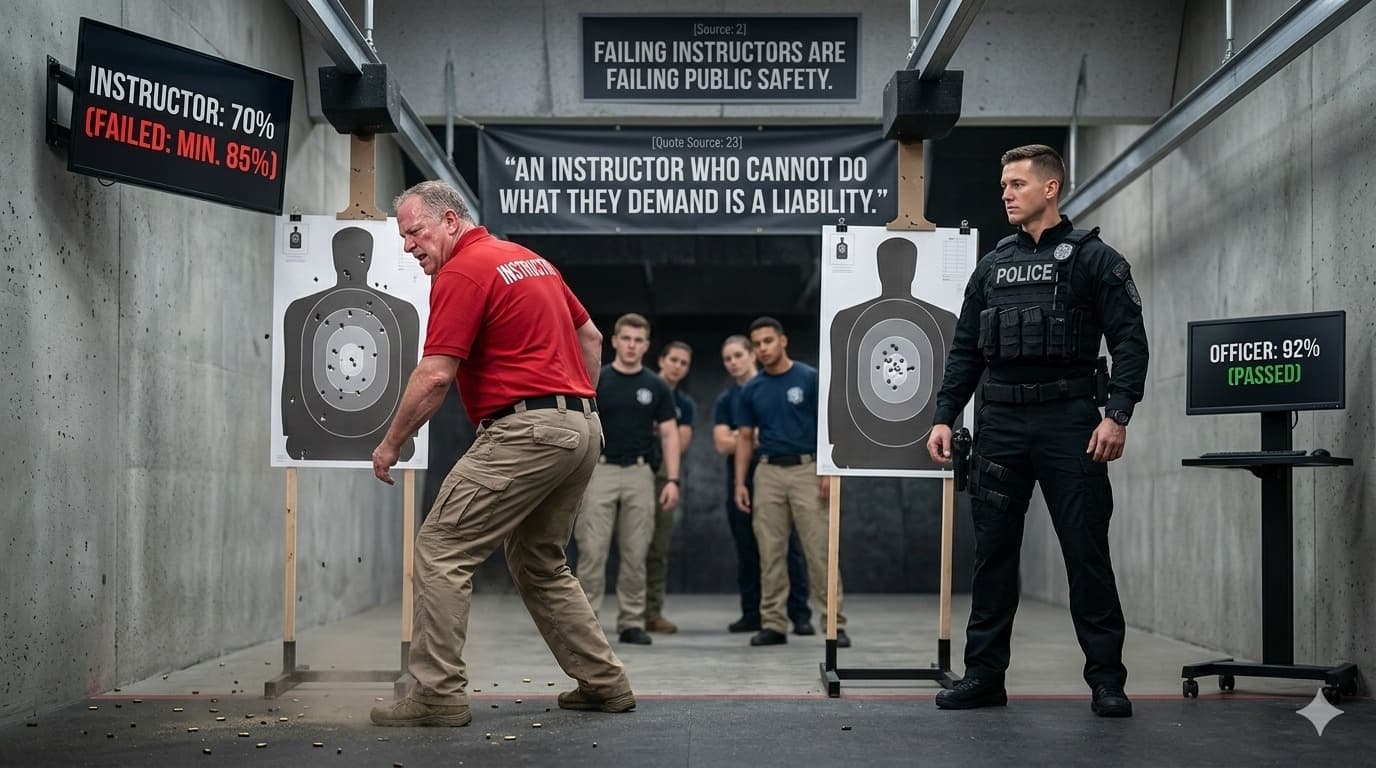
Let me put something uncomfortable on the table: most law enforcement training programs are not designed around what officers actually need. They are designed around what the instructor staff is capable of delivering.
That should concern every agency administrator, every training director, and every officer who depends on that training to stay alive. Training is only as relevant as the people delivering it. And right now, too many instructors are dragging the profession backward instead of driving it forward.
The Title Has Been Cheapened
Somewhere along the line, we conflated seniority with competency. The red shirt, the podium, the "experience" accumulated fifteen years ago — none of it automatically confers the ability to shape officers who will face modern threats. Yet these signals routinely determine who gets elevated to instructor positions.
Competency is not a credential you earn once and carry for life. It is a standard you maintain, sharpen, and demonstrate — continuously. An instructor who cannot pass the physical assessments they administer to students, who cannot qualify at a higher level than those they're evaluating, who cannot perform a hands-on control technique rather than just describe it — that instructor is not a resource. They are a liability.
An instructor who cannot do what they demand of students is not a resource. They are a liability — to the agency, to the officers they train, and to the communities those officers serve.
The Cost of Check-the-Box Training
When instructors stop pushing themselves, training collapses into compliance theater. The documentation looks fine. The court won't. When tragedy strikes, the jury will ask one question: Why weren't these officers trained for the threats that everyone already knew were coming?
That question lands on agency leadership. But the origin point is the instructor who never updated their curriculum or sought outside certification. Mediocrity in uniform is not a minor administrative problem. In this field, it is a force multiplier for catastrophic outcomes.
What Failure Actually Looks Like
Consider three events that illustrate what is at stake when instructor standards fail:
- Orlando, 2010: A firearms instructor accidentally discharged a firearm during a safety class, shooting a student in the foot.
- Punta Gorda, 2016: A 73-year-old woman was fatally shot during a citizen police academy role-play when an officer used a loaded firearm during a simulation.
- Miami-Dade, 2022: A CBP firearms instructor was accidentally shot and killed during a building search training evolution.
These are not war stories; they are training casualties — entirely preventable, occurring inside the structure that was supposed to make people safer.
The Standard That Isn't a Standard
The underlying doctrine that enables this pattern is the idea that minimum scores on standardized paper targets equal practical competence. In Florida, the Class "G" armed security pathway sets 70% as the passing score. That is the legal definition of "qualified."
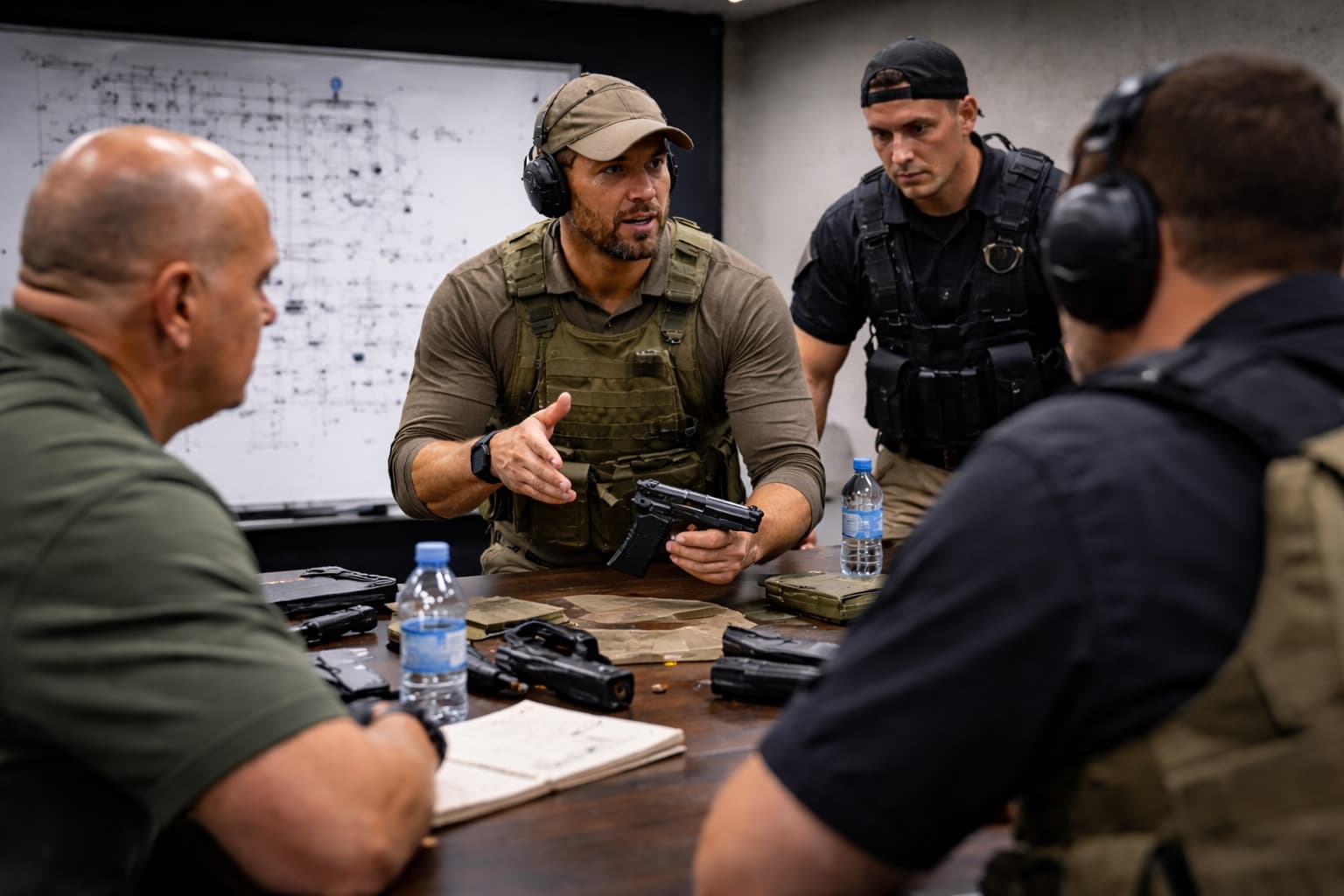
Florida already knows what serious standards look like. Under the School Guardian framework, participants must achieve an 85% pass rate. The gap between 70% and 85% is the difference between a system built around what is minimally defensible and one built around what the public safety mission actually demands.
What Credible Instructors Actually Look Like
Credible instructors train alongside their students, not above them. They seek out practitioners who are better than they are, because they understand that ego is the enemy of improvement. They can still do the job—not in theory, but right now, under pressure, in front of their students.
The Institutional Failure
Behind every underqualified instructor is a system that elevated them. Agency leadership that refuses to fund continuing education and training directors who protect fragile egos rather than enforce standards are systemic failures. The profession needs training standards that are enforced rather than suggested.
The profession needs training standards that are enforced rather than suggested. It needs leadership willing to have the hard conversation — with the veteran who has coasted for a decade, with the instructor whose curriculum hasn't been updated since the last administration.
What the Fix Actually Requires
- Risk-Based Proficiency: Security personnel should qualify at a minimum of 85%. High-density environments should require 90% or higher.
- Formal Audit Structure: State licensure for all civilian firearms instruction with defined minimum curriculum and live-fire verification.
- Operational Development: Agencies must treat instructor development as a recurring operational function. Quarterly cycles should replace annual events.
A Direct Challenge
If you carry an instructor title, apply this test right now: Can you pass the physical assessments you administer? Can you qualify above the standard you require? Can you perform every technique in your curriculum? Can you defend every use-of-force doctrine you teach in front of a jury?
If any of those questions produce discomfort, it is diagnostic. Rise to the standard — or get out of the way and let someone who can meet it take the line.
Stop Being Comfortable. Start Being Credible.
Build programs around what officers need to survive and protect. Stop protecting institutional inertia at the expense of officer preparedness. Negligence kills. And in this profession, it does not only kill officers. It kills the public they swore to protect.