
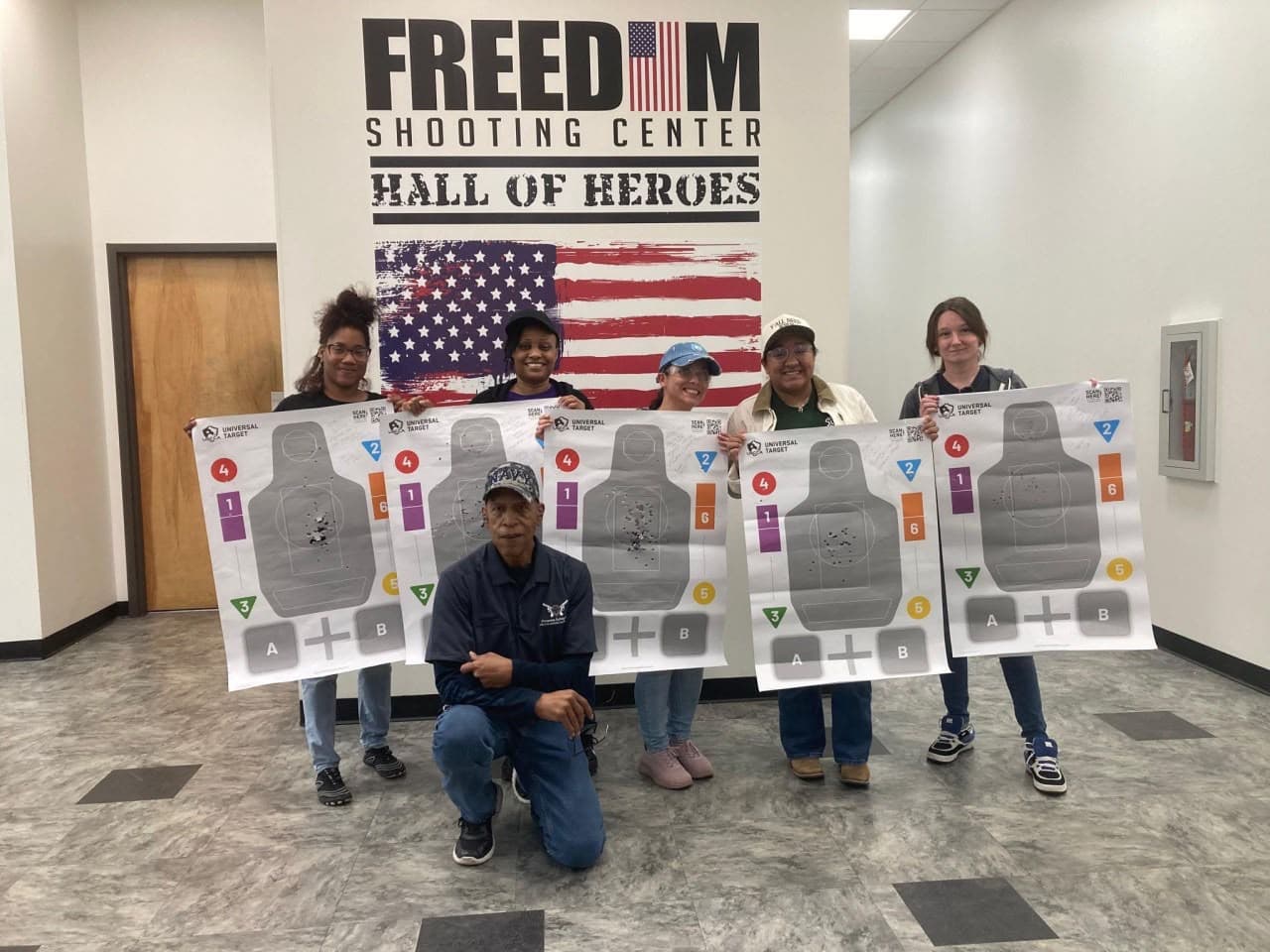
During a recent live-fire session with three students, one of them committed a serious safety violation while handling a loaded firearm.
The range became secondary immediately.
Her stance was solid. Her grip was solid. Her marksmanship wasn't the problem. Her attention was
I stopped the exercise and asked her to step off the line with me, away from the other two. We talked privately: what happened, why it created risk, how fast an incident develops when attention slips even briefly. I wasn’t trying to punish her. I was trying to protect everyone on that range while keeping her confidence intact. She understood what happened and why it mattered. We went back to training, and the rest of the session ran clean.
Students don’t just learn from the drills I design. They learn from how I respond when something goes wrong. Pressure doesn't create character. It reveals habits. Training is where we build better ones.
Watching the Person, Not Just the Firearm
Anyone can run a perfect string of fire. The real test of an instructor shows up in the quiet moments: a safety issue handled with professionalism and respect for everyone on the line.
I watch a student’s eyes, body language, breathing, and concentration as closely as I watch their trigger finger. The firearm is only part of what I’m evaluating. I’m also evaluating the person holding it.
Students rarely go unsafe because they don’t know the rules. They go unsafe because attention shifts, distraction creeps in, or they’re already thinking about the next task before finishing this one. I’m not just teaching someone how to shoot. I’m teaching them to stay present while making decisions with real consequences.
The smallest change in a student’s mindset is often the earliest warning sign. Catch it early, or clean up after it later.
The Adjustment That Changes Everything
The correction that has made the biggest difference in my instruction isn’t a drill. It’s one phrase.
Stop. Reset. Give me one good shot.
Struggling students want to fire again immediately, to make up for the last round. That instinct reinforces the mistake they’re trying to fix.
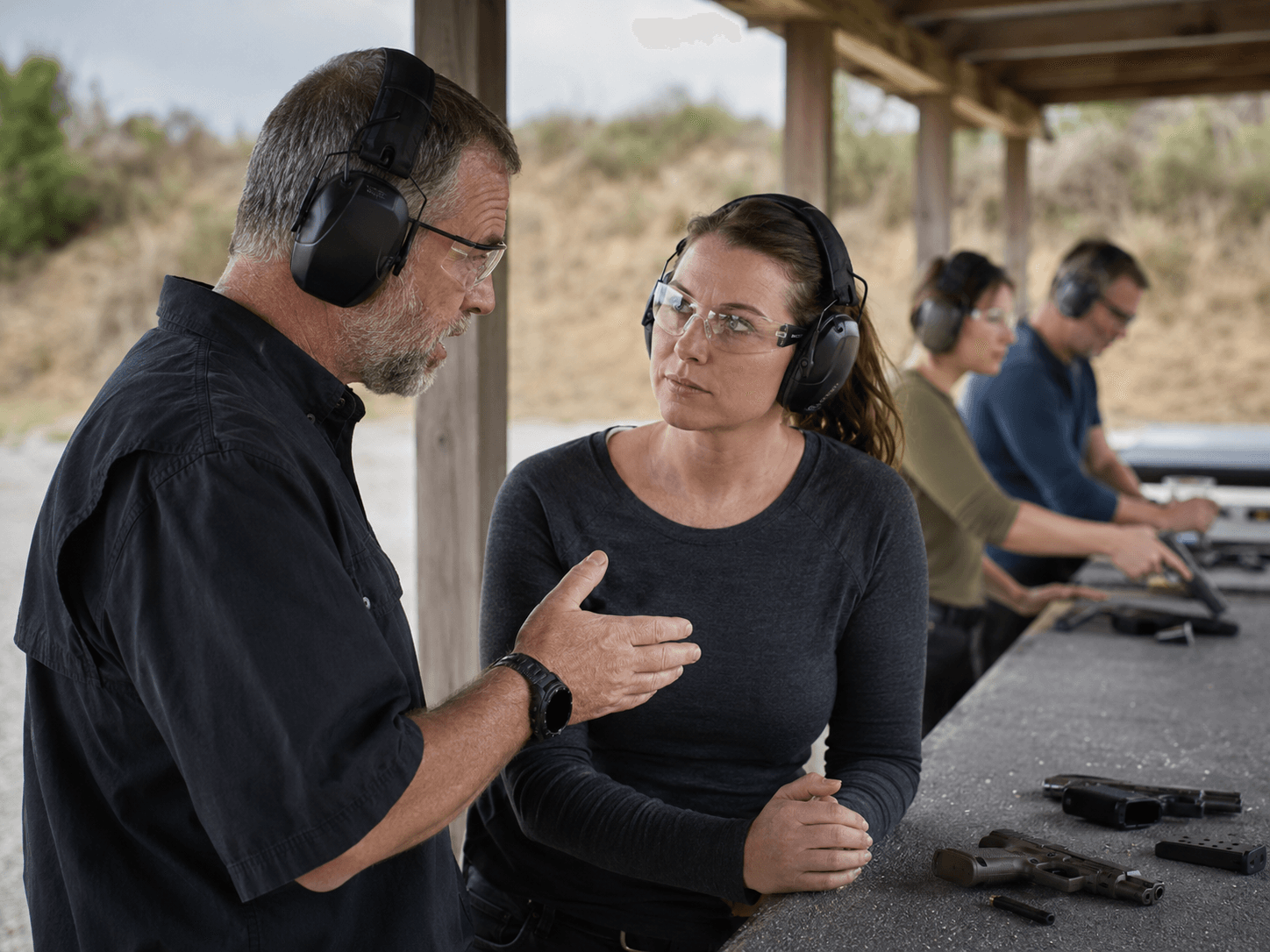
Instead: pause. Breathe. Reset the grip if it needs it. Refocus on the front sight or the optic. Fire one deliberate shot. Not a magazine. One.
That single change moves a student from chasing results to executing a process. One good repetition, then another. Consistency replaces frustration. Confidence grows from successful execution, not from more instructions.
The same principle applies well beyond the firing line. Under pressure, people often rush to fix the last mistake instead of focusing on the next correct action. Slow down. Control what you can. Execute the next step well.
Here’s why it works. A struggling student is thinking about where the last round landed, not about grip, sight picture, trigger press, or follow-through. Stop, reset, execute. That clears it. Mechanically nothing has changed. Mentally, everything has.
The Pattern, and What It Costs to Miss
I see this constantly, and not only with new shooters. First-time owners, experienced concealed carriers, competitive shooters, instructor candidates. All of them.
The surface problem looks the same every time: a poor group, hesitation, a lapse in attention. Correct what’s visible, and sometimes that’s right. Just as often the visible problem is a symptom, and the real cause is fatigue, stress, overthinking, or a loss of confidence.
Two students can shoot identical targets for completely different reasons and need completely different coaching. Skip the diagnosis, and the correction lands on the wrong problem. The group doesn’t improve. The student decides they’re not cut out for this, and that belief is harder to fix than any grip.
The Measure I Care About
People measure instructors by what they know. I measure them by what their students become.
Knowledge matters. Credentials matter. Experience matters. None of it guarantees someone can teach. The instructors who shaped me weren’t the ones who talked the most or ran the fastest drills. They watched, listened, adjusted, and stayed in it until the student got there.
My goal has never been to produce the fastest shooter on the range. It's to develop safer, more confident people who can make sound decisions under pressure. Tight groups are simply evidence that the process is working.
Years from now, most students won't remember the size of the groups they shot that day. They'll remember how an instructor made them feel, what they learned about themselves, and whether they left believing they could improve. That's the measure that matters.
The best instructors aren't remembered for how well they performed. They’re remembered for what their students became after they left the range.