
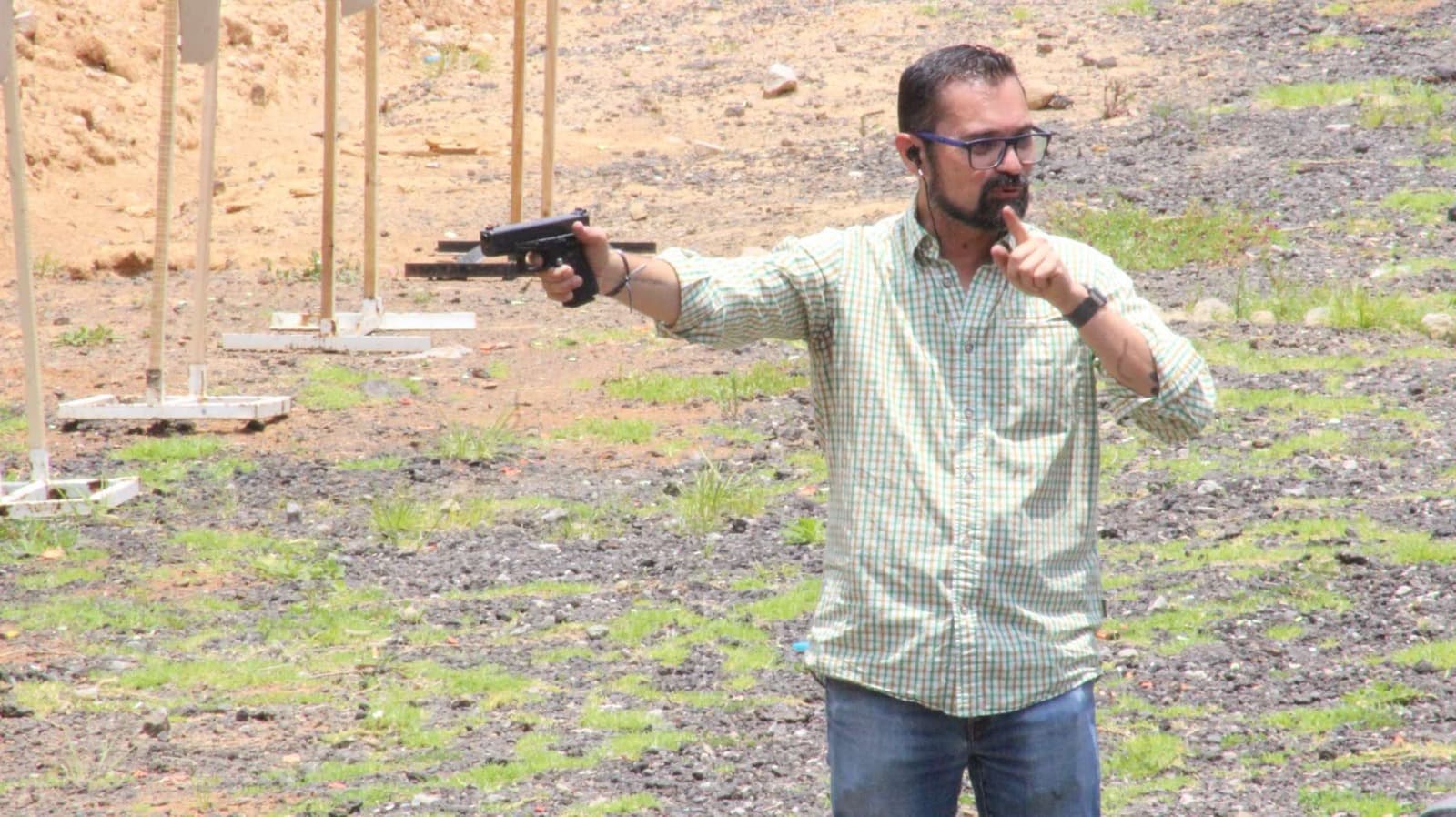
I was training the Mexican Army's Fuerza Comando team when I found a shooter who wasn't progressing. Weeks of work, no improvement. I had the conversation and pulled him from the team.
The transfer paperwork stalled. Heavy caseload, administrative delays, a little luck. He stayed on the roster while it worked itself out.
We kept working. Against every expectation I had going in, he became the best shooter I ever trained in Fuerza Comando.
I didn't change the drills. I changed how I talked to him.
That case reshaped how I diagnose a struggling shooter. The old assumption was simple: he can't do it. The question that replaced it is harder to sit with: am I doing everything it takes for him to understand me? When a student lags now, I don't start with what's wrong with him. I start with what I failed to give him.
The Part Nobody Films
We focus heavily on manipulation speed, technical execution around cover, the gear for the situation: things you can see, touch, and buy.
The cognitive side, target identification, information processing, decision-making, and the legal and tactical justification behind pulling the trigger, almost never gets trained on the range.
Cognitive drills don't perform well on a sixty-second reel. They don't get the engagement a fast draw gets. But they're what keeps a shooter effective, and alive, under real-world stress.
Cognitive drills aren't what gets clicks. They're what keeps a shooter effective, and alive, under real-world stress.
When It's Not the Drill, It's Me
Sometimes it looks like a shooting problem: a student failing to execute a drill, failing to adapt. Underneath, it's something else entirely.
I've had shooters reject material outright, not because the technique was wrong, but because of who was teaching it. An instructor's background carries a weight the shooter assigns on his own terms.
If a shooter doesn't respect or relate to where I came from, he closes off before I finish the sentence, no matter how accurate the material is.
The Fix That Isn't More Coaching
The standard recipe works for most shooters: sight picture, mechanical focus, a smooth trigger press. For a small percentage, that same recipe produces paralysis by analysis. They do everything by the book and still miss.
What's usually tried next is more: more cues, more corrections, more adjustments. I've watched that instinct fail the same shooter twice. Strip the noise instead. Give him the bare minimum and let him find his own rhythm.
Some shooters don't need more coaching. They need fewer distractions to do incredible things.
Sight, Sight, Sight
Both cases eventually surface in the same place: the flinch, the moment a shooter pushes the muzzle down just before the shot breaks. I fix it with four words, spoken out loud through the entire trigger press: sight, sight, sight, sight.
You don't beat a flinch by explaining it. You crowd it out with a task the brain can't ignore.
Verbalizing locks the shooter's full attention onto the sight picture for the whole press. It leaves no bandwidth left to anticipate the bang. Telling him not to flinch does the opposite. It puts the recoil right back in his head.
The shift starts out loud and then goes quiet. A shooter says it out loud first, then moves to repeating it silently, and somewhere in that transition the habit stops being a conscious override and becomes the way he shoots. That's what makes it durable. It's not a trick for one range session. It's muscle memory built the deliberate way, on purpose, until it runs on its own.
Every Shooter Has It
The flinch isn't a beginner problem. It's a human one. I see it in shooters who've never fired a round and in shooters who've been doing this for twenty years, because it's a defensive reflex, not a skill gap.
What changes with experience isn't whether the reflex fires. It's whether the shooter notices it firing. Advanced shooters develop enough sensory awareness to catch the exact instant their hand starts pushing the muzzle down, and they freeze the press and reset before the shot breaks. They're not immune to the flinch. They've just learned to catch it in time.
Where the Diagnosis Goes Wrong
Dry fire alone rarely fixes a live-fire flinch. It removes the one thing the flinch responds to: the blast.
A flinch isn't a technique problem. It's a subconscious defensive response to a live stimulus. A shooter can run a clean trigger press in dry fire and still flinch when a live round goes off, because his brain hasn't learned to process the explosion without defending against it. The fix is exposing him to live rounds under structure, not removing the stimulus.
What I Tell New Instructors
One rule survives everything else I could pass on: every correction should produce an immediate, visible improvement.
Time, ammunition, and energy run out fast on a range. A correction that doesn't land burns through all three, plus something harder to replace: the shooter's trust. A correction that works does two things at once: it reinforces the shooter's confidence, and it builds the instructor's credibility.
Adults don't learn the way children do. They walk in with history, bias, and specific needs. An instructor who ignores that is teaching a student who doesn't exist.
The industry doesn't have a shortage of instructors who can perform. It has a shortage of instructors who measure. Too much of what gets taught is built to look good on camera, not to hold up under real stress. Our job isn't to show off what we can do. It's to be an effective tool in the student's development, and to take full responsibility when they don't get there.
True professionalism in this industry is defined by the measurable success of the student, not the performance of the instructor.
When a shooter fails to execute, that's not a verdict on him. It's a question for the person standing next to him, and most days, the answer starts with me.