
He was at 7 yards. Not a distance that should produce a problem. But his rounds were scattered across the target with no pattern, no grouping, no logic to where they were landing. During the qualification, he kept reaching for the same explanations — grip pressure, trigger finger placement, sight picture. He adjusted. He fired again. Same result.
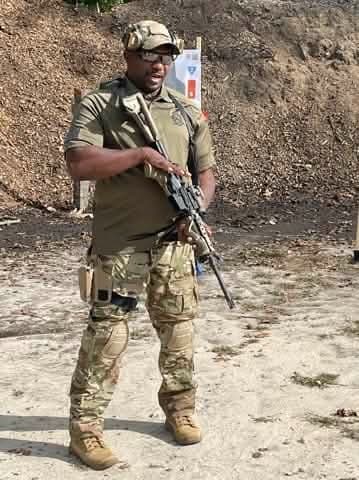
That frustration is familiar. When accuracy breaks down, most shooters default to their hands because the hands are the last thing that touched the gun. It is a reasonable assumption. It is also usually wrong.
What I was watching from behind that student was not a grip problem. It was not a trigger problem. From the waist up, the mechanics were passable. But from the waist down, there was nothing — no structure, no load, no athletic base. He was standing nearly upright, weight settled back on his heels, knees locked. His body was not prepared to receive recoil. It was waiting to be moved by it.
This is the diagnostic failure that repeats itself more than almost any other in firearms training. The eyes go where the gun goes. So when accuracy falls apart, the natural instinct is to examine whatever is closest to the muzzle — the grip, the trigger, the sights. The feet never get looked at. The stance gets treated as background, not as mechanism.
But stance is not background. It is the foundation of the entire system. Recoil does not begin in the hands — it is absorbed through them. The body is the structure that either manages that energy or surrenders to it. A shooter with no base is not controlling a firearm; they are reacting to one. Every shot becomes a recovery event rather than a controlled sequence.
Stability is a structural decision made before the first shot.
The fix was not complicated, and that is part of the point. I had him adopt an athletic, aggressive stance: slight bend in the knees, weight forward and loaded onto the balls of the feet, upper body angled slightly into the gun, shoulders stacked over the toes. Nothing changed above the waist. I told him to fire a controlled string and keep everything else exactly as it was.
The improvement was immediate. His shot group tightened. Muzzle rise dropped. Follow-up shots became consistent instead of variable. The gun stopped moving him, and he started managing the gun. His confidence shifted visibly — which matters more than most instructors acknowledge, because a shooter who starts seeing results begins trusting the process.
This Pattern Is Not Rare
Across more than a decade of instruction and thousands of students — military, law enforcement, competitive, and civilian — the breakdown at the base is one of the most consistent problems I see. It transcends skill level. I have watched experienced shooters with sound trigger mechanics and well-developed grip habits produce inconsistent results because their platform is wrong. The hands get all the attention. The feet get none.
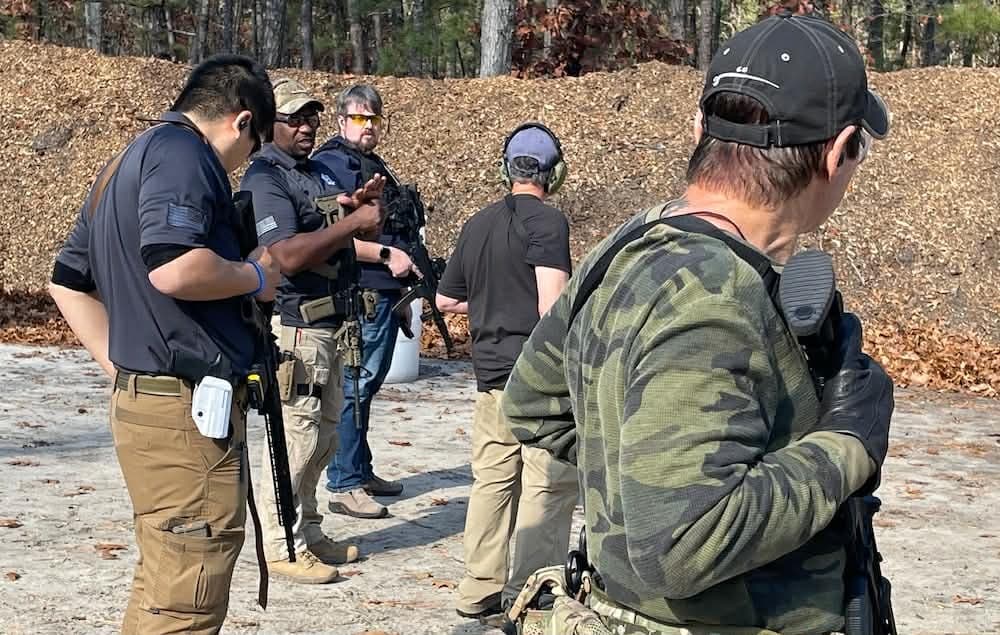
Part of this is a training culture issue. Most range environments are static. Shooters stand in a lane, address a target, fire from a fixed position. The visual feedback they receive is about where rounds land, not about what the body is doing to produce that result. An instructor watching from the side can see the heel bias, the locked knees, the upright posture that offers no resistance to recoil. But if nobody is watching for it, nobody corrects it.
There is also a martial arts parallel worth naming. In virtually every combat sport and athletic discipline that involves absorbing or redirecting force — boxing, wrestling, Olympic lifting — the foundational coaching principle is the same: load the legs, bend the knees, weight forward. The athletic stance is not a style preference. It is structural physics.
Ground to hips. Hips to shoulders. Shoulders to hands. Break the chain anywhere and the system fails.
The Diagnostic Model
The diagnostic model I return to is simple: ground up, every time. When a shooter is producing scattered groups, exaggerated muzzle rise, slow recoil recovery, or inconsistent follow-up shots — before adjusting the grip, before examining the trigger press, before pulling the sights — look at the stance. Is the weight forward? Are the knees bent? Is the body leaning into the gun or away from it? Is the shooter structured or just standing?
This framework applies regardless of weapon system, distance, or experience level. It applies under stress, where the body tends to default to its most practiced positions. A shooter who has trained with proper structure will maintain it when conditions degrade. A shooter who has trained with an upright, heel-weighted stance will produce that same unreliable platform under pressure, when consistency matters most.
The hands are the last adjustment. They are the precision layer at the top of the system. But precision built on an unstable base is not precision — it is luck that occasionally looks like skill. Serious shooters and instructors who want repeatable results need to start where every other athletic discipline starts: with the foundation.
That student at 7 yards left the range that day with a tighter group and a different way of thinking about his performance. Not because I fixed his trigger or corrected his grip — I never touched either. I changed the base, and the base changed everything above it.
Before the next correction you make is about hands, check what the feet are doing. A stable base does not just solve stance problems. It solves problems that look like something else entirely — because most shooting problems are not where they appear to be. They are where the structure broke down first.
Fix the foundation. Everything else follows.