
This article reflects Axel Narvaez's personal observations and professional experiences. He is speaking solely on his own behalf. His views do not represent an official position or endorsement of the U.S. Navy, the Department of Defense, or the Navy Action Shooting Team.
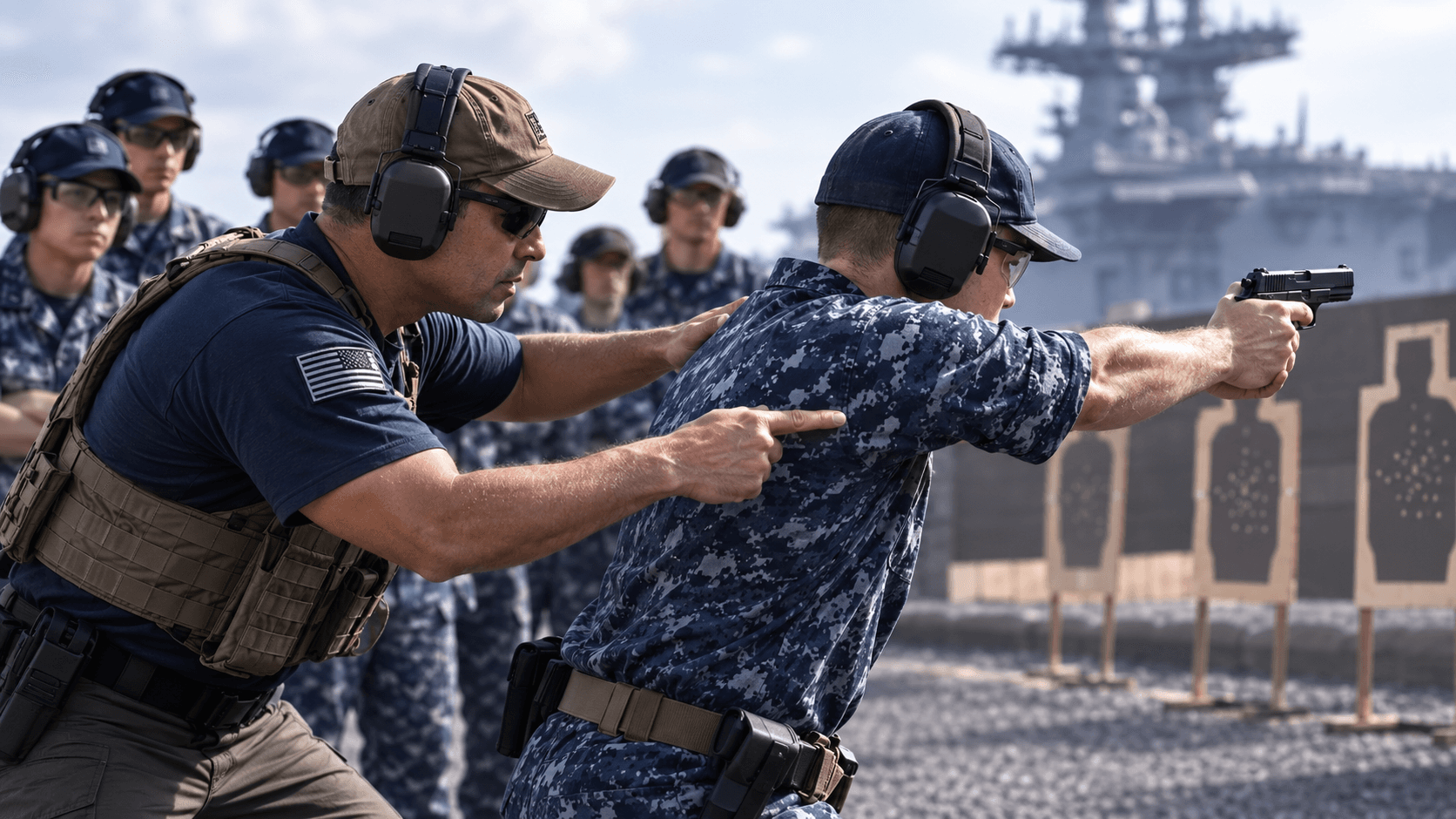
The Navy keeps ending up in the news for the wrong reasons: sailors on camera with poor stance, gear mounted wrong. People want to blame the shooters. I don't. I've spent 25-plus years and trained over 3,000 sailors, and I can tell you where the real failure sits: not on the line, in the instruction.
I learned that lesson the hard way at the Navy Small Arms Marksmanship Instructor (SAMI) course. My lead instructor, a former Marine, wanted me in a weaver or isosceles stance. He asked more than once, politely at first, then less so. I respectfully held my ground and kept the stance I trusted, a combat position built around a good center of gravity, not the textbook posture the curriculum called for. He watched my groups for a while without saying much. Then he told me to keep doing whatever I was doing, Doc. I shot a 240 out of 240 that day, a rare achievement for someone from a medical military background in that course.
The lesson wasn't about stance. It was that there's always more than one way to skin a cat, and every piece of marksmanship doctrine can be challenged, tested, and proven, as long as it's done safely.
A curriculum is a starting point. It's not scripture. That distinction matters more than most instructors want to admit. A curriculum gets written once and taught a thousand times, often by people who never stopped to question whether it fit the sailor standing in front of them. I could have folded that day and shot the stance the course wanted. I'd probably have shot worse, and the lesson I walked away with would have been the wrong one: follow the script even when it isn't working. Instead I learned that a good instructor tests the method against the result, not the other way around.
A curriculum is a starting point. It's not scripture.
In recent years the Navy has taken a beating in the media over sailors showing poor shooting technique, improperly mounted equipment, and physical standards slipping across the fleet. The instinct is to treat that as a discipline problem or a fitness problem. It's neither, at least not primarily. It's an attention to detail problem sitting with the instructors, not the students. Instructional quality varies across the fleet, and that variation is where I'd point people looking for the real cause.
We talk a good game about standard operating procedures, but an SOP followed without judgment isn't instruction, it's paperwork. And a lot of that paperwork gets treated as the finish line instead of the floor.
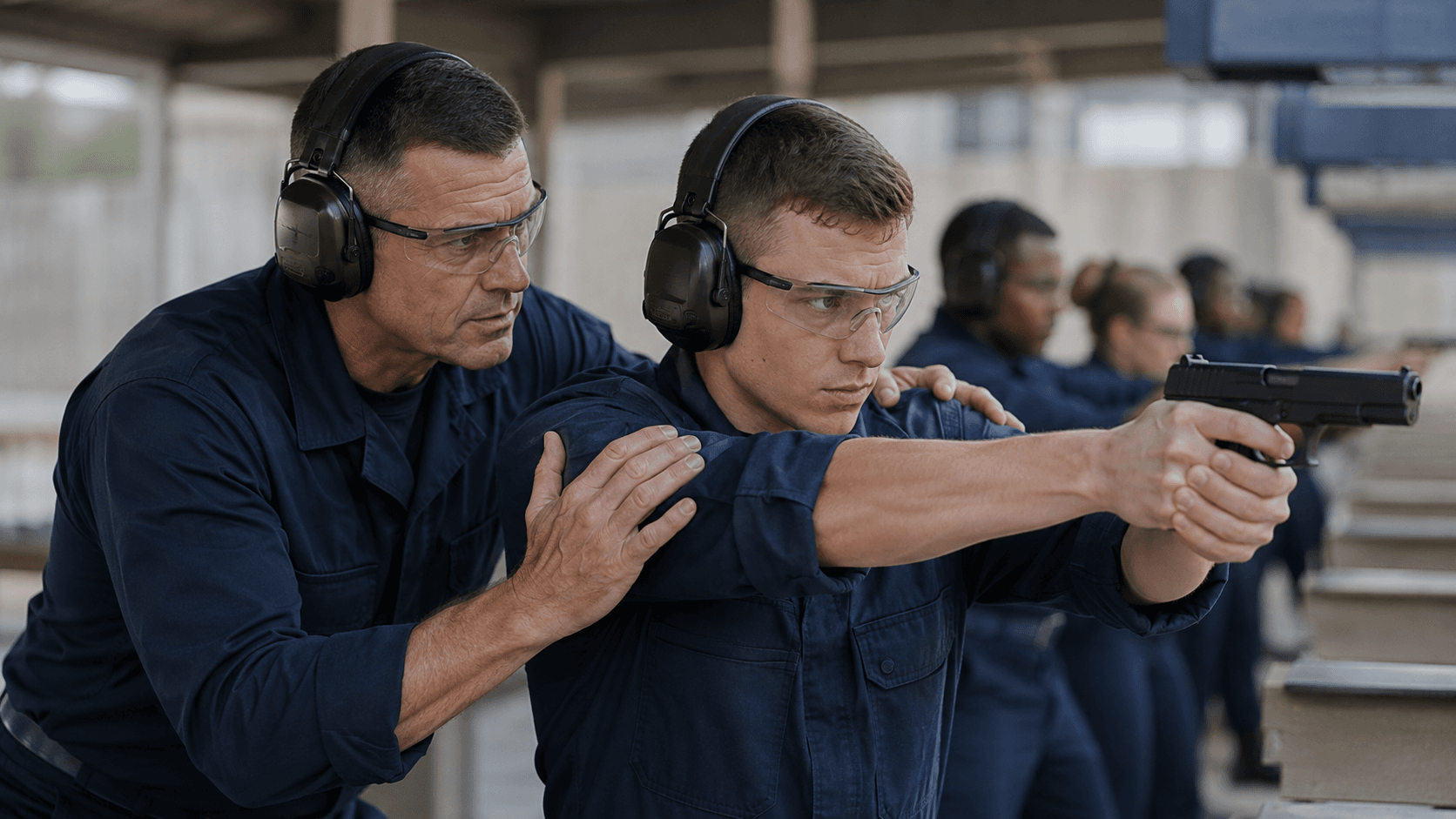
Here's where I think most instructors, and a lot of students trying to self-correct, get the diagnosis wrong. In too many places, instructors are asked to evaluate performance without enough continued development, live demonstration, or outside testing of their own standards. If you can't demonstrate the fundamental yourself, it's harder to spot where a student's version of it is breaking down. So the qual gets run straight out of the SOP, checked off, and everyone moves on. That's not evaluation. That's attendance.
That's not evaluation. That's attendance.
The most common failure I see is instructors running a sailor through a firearms qual without ever slowing down to dry fire first or properly evaluate how that sailor is actually applying the fundamentals. Skipping that step is detrimental to the fleet, full stop, and it's one major reason these problems keep showing up publicly. You cannot fix what you never diagnosed.
The fix isn't complicated, but it does take discipline on the instructor's part. Proper evaluation. Real time monitoring. Coaching in the moment instead of after the scorecard comes back low. And demonstrating what right looks like from the very first rep, not describing it and hoping it lands.
When I run Navy pistol or rifle instruction, I build a relaxed but safe learning environment first. I take the time to explain the why behind every subject in detail, not just the how. I demo it myself. I set metrics up front. I evaluate and correct as we go, continuously, instead of waiting for a final score to tell the story. The end result is consistently positive, and it shows up in more than just the paper target: students leave motivated well beyond the classroom environment.
The measurable difference is real. Students qualify during their first relay instead of needing a second or third pass. We produce more Sharpshooter and Expert scores. And maybe more importantly, they walk away with the confidence to go after more advanced shooting qualifications instead of dreading the next one.
None of this is isolated to one range or one command. It's a pattern that shows up widely enough across the fleet to matter, and it's one my brothers on the Navy Action Shooting Team and I are positioned to help fix, because we've already seen this approach work in the rooms we control. The gap isn't talent, and it isn't willpower on the part of the sailors. It's that instructors responsible for evaluating shooters aren't always given the continued development or the outside testing that would let them evaluate with full confidence.
If a new instructor remembers one thing from my experience, it should be this: be a forever student. Always go back to the basics, even after you've earned the instructor title. Always take the time to test your own standard so you actually know where your performance sits, not where you assume it sits. Your credentials get you in the door. They are not enough to keep you credible in today's operational environment.
Your credentials get you in the door. They are not enough to keep you credible in today's operational environment.
I'd like to write more on the current state of Navy marksmanship, and I'd like more people to know what the Navy Action Shooting Team is capable of, speaking only for myself and not for the Navy or the team. This subject matters to me and to my teammates, and I think the fleet is ready to hear it straight.
None of this is a knock on the sailors showing up to qualify. Most of them want to shoot well and want someone in front of them who can actually show them how. That's the job. It always has been. The instructors who take that seriously produce fleet sailors who qualify clean and stay confident. When that instruction breaks down, the conversation ends up in the press instead of on the range, where it belongs.