
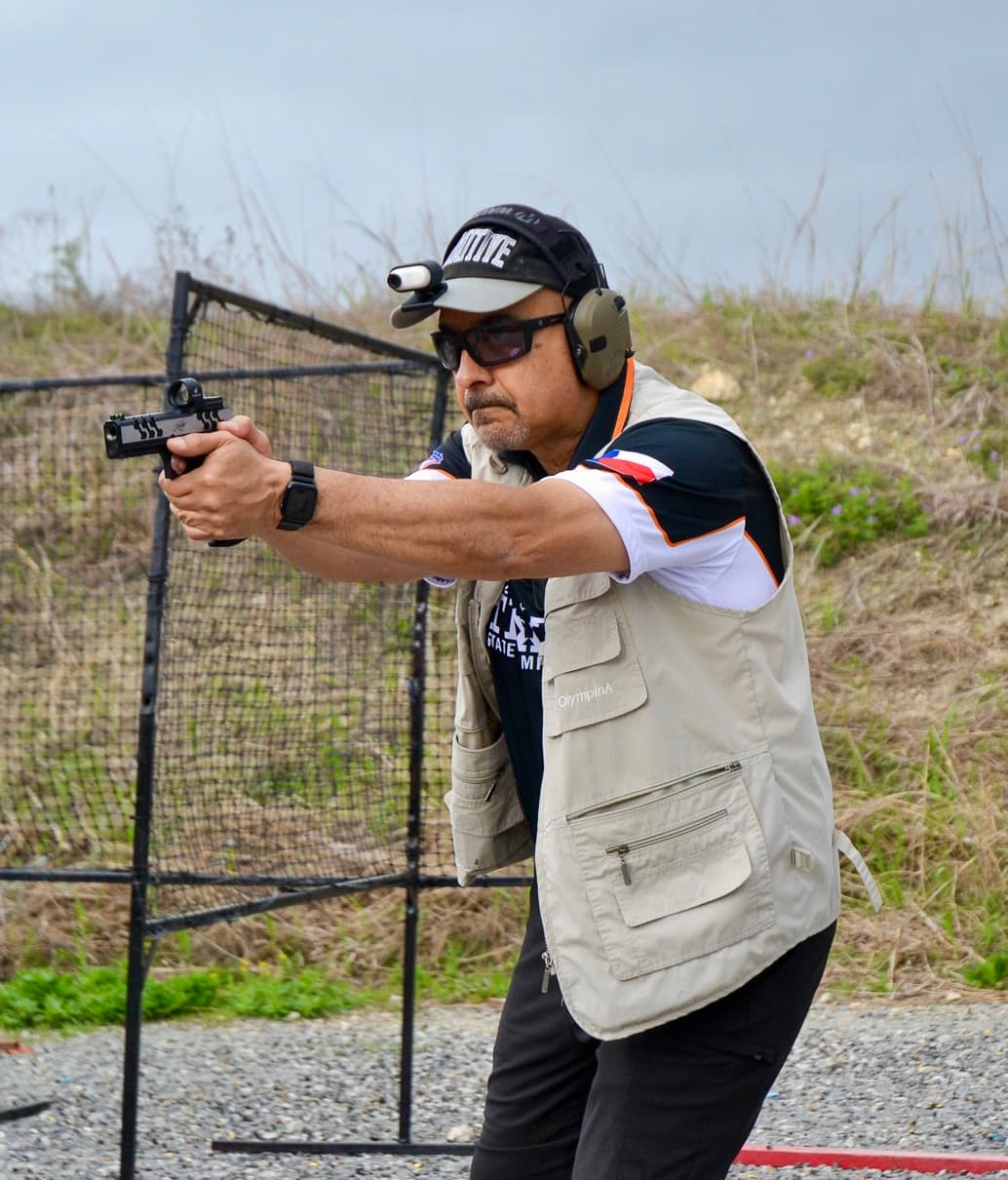
Dan Alvarado has been shooting IDPA, USPSA, and Steel Challenge off and on for fourteen years now, moving from Colorado to Las Vegas and now to the DFW Area. He's built up solid experience across multiple divisions in each discipline. For years, when his shooting progress stalled, the voice in his head told him the same thing over and over: get a better gun. He doesn't listen to it anymore.
The change began on a weekend at the Silver State IDPA Championship back in 2023. He shot the match with the staff on Friday then spent the following day as a safety officer, running competitors and watching the field deal with the same stages he dealt with the day before.
His plan going in was simple: shoot the stage directly in front of him the best he possibly could. He refused to think about how anyone else was shooting. Not the shooter in front of him, not how the squad's fastest gun ran the stage, not the stage he just finished. Focused only on the current stage that is directly in front of him right now. Nothing else.
He carried that focus through every stage of the match, avoiding the mistakes that usually add up over a full day of competition. “Not anything really amazing or fast,” he says, “but I had no major trainwrecks on any stage.” The next day, running the match for other competitors, he was impressed by the field and assumed he had blended into somewhere in the middle of the pack.
He hadn't. The result was one of his most consistent performances, resulting in a first-place finish in the Sharpshooter class of the Stock Service Pistol (SSP) Division.
Focus on what you can control, stay present, and let everything else fall where it may.
The advice he'd heard for years, often from inside his own head, was to get a better gun, better equipment, the latest and greatest. He doesn't buy into that anymore, not because the gear doesn't matter, but because it was never the gear that was costing him points, time, or penalties in the matches. “Mental focus, or lack thereof, is an internal equipment problem,” he says. Any reliable modern pistol that fits the shooter properly can win at nearly any level of competition in the right hands. The guns that fit a shooter's hand, stance, posture, and draw will outperform a supposedly better gun that doesn't. That's a fitting problem, not a hardware problem. The equipment that was actually failing him was never in the holster.
The moment he starts thinking about how someone else is shooting or replaying how bad or how good his last stage went, his focus leaves the stage in front of him. That's when the mental errors begin, procedurals, hits on non-threats, a forgotten stage plan halfway through a run, the list goes on and on. His fix is a small ritual most people would miss watching from the sidelines. Walking from one stage to the next, he says it out loud, to himself: “That stage is done. Now let's focus on the next.”
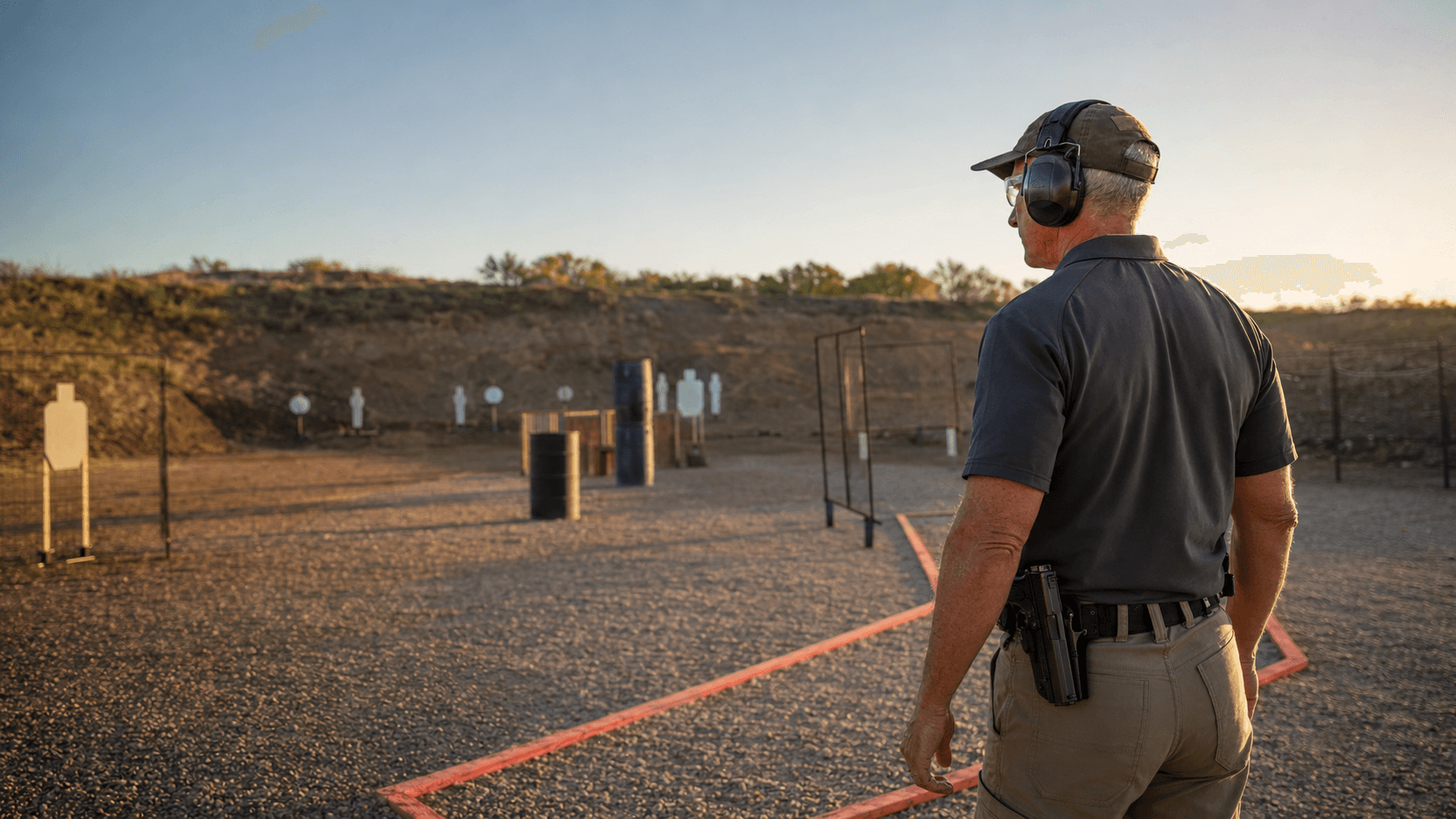
By design, the time between stages gives a shooter a narrow window to read the layout, build a plan, rehearse the plan, commit, then execute. Spend that window replaying the last stage or scouting a competitor's splits, and the plan never gets built. The stage gets shot on instinct instead, and instinct alone rarely holds up across a full match. The results showed up in consistency more than raw speed: fewer errors, cleaner execution of his actual stage plan instead of an improvised version of it, better performance across a full match day rather than one hot stage followed by a collapse. He isn't certain the pattern holds for every competitor, but he has a theory. “Those that do well,” he says, “are really good at staying in the now.”
That theory tracks where he's spent his energy since leaving Vegas in 2024. He turns 60 this year and is focused on his physical performance as well, losing over 60 pounds in the last year which has helped him both mentally and physically. Dan has five Level III or above matches planned for the rest of the year so he will get to test his theory quite a bit. He's still working to sharpen his skills in USPSA, still capturing his matches on video, still testing pistols to find that exact fit. Some of his favorites lately are the Kimber 2K11 and his Bul 1911, not really looking to find something better, but to find what actually fits him. He posts match footage under the DFW Practical Shooter name, stage breakdowns rather than highlight reels, because watching his own runs back reinforces his desire to continually improve, he is always looking how to shave additional seconds from his time.
Where Shooters Sabotage Themselves
Equipment problems happen, he says, but in his experience they're rarely where most shooters lose matches. “There are equipment problems from time to time, but the mental game is where shooters get the biggest advantage and the quickest improvement.” His advice for a shooter who has plateaued: film every match from both first and third-person angles, then go through every second of it, all stages not just the stages that went well. Count the seconds when not shooting, these are all opportunities. If you can reduce the time not shooting you will reduce your overall time.
He did exactly that and found something he'd never have caught by feel alone. He was losing anywhere from one to four seconds every stage just by not having his gun up and ready when entering a shooting area. A small habit, invisible in the moment, bleeding time across a match. This fix had been shared many times before with him but actually seeing and counting seconds on video was eye opening and really reinforces the impact. Fixing it changed more than the clock. “I'm still not perfect at it,” he admits, “but watching my stage videos every match helps tremendously.”
What Doesn't Show Up on the Scorecard
The discipline runs in both directions. Staying present on his own stage is the same instinct, he says, that makes competitive shooters some of the friendliest, welcoming and most generous people in the sport. “The type of people that shoot competitively are a great group of folks that truly want to help others.” People have let him use one of their guns mid-match when his had a problem, offered tools and expertise to help him a fix an equipment issue between stages, offered advice when he was struggling, and he's shared that same generosity to give back to the sport to newer shooters coming up. It is so rewarding to help new shooters feel just a little less stressed during their first match. It is so rewarding bringing new shooters into the sport and then seeing them do well. None of this shows up on a scorecard, but it is often a better feeling than taking home a plaque.
The equipment is not what holds anyone back. The unplanned errors, the little mistakes, knowing you could have done better on that last stage…those little things in your head will slow you down way more than the equipment. Let them go, focus on the now..