

On one training day in southwestern Pennsylvania, I was running a mixed group of shooters. The roster included an experienced SWAT officer, a Marine veteran, and someone who had never handled an AR platform before that morning. We moved through basic marksmanship and safety drills first, then familiarization with several different AR platforms, before the practical foundation was solid enough to build on. Once that base was set, I moved the group into multigun scenarios, the kind that force new skills to surface and old ones to get tested under a clock. They work new skills in while reinforcing old ones, and a little competition sharpens both.
The scenario that day was a hostage run. The new shooter, the one who had come in with the least experience, had soaked up every piece of instruction given that morning and worked through the run without a hiccup. They beat the SWAT officer's time. They beat shooters who had been training for years. When the results came back, I watched the reaction land on that shooter's face before it landed anywhere else, not just excitement but something closer to a glow. It was very fulfilling to experience. The class that grew out of that one session kept growing afterward, in size and in what the group was willing to attempt.
The shooter who surprised everyone that day wasn't the hard one to teach. The hard ones were already sure they knew how to shoot.
The Shooter Who Already Knew Everything
Some students arrive at my range with an idea already fixed in their head, that they know everything. Not all of them, but enough that I watch for it now. They have put in the years. They have earned rank, or a badge, or a reputation built somewhere else, and they listen to a correction the way a person listens to something they have already decided is wrong. They nod. Then they go back to doing it their own way, because their own way has worked for them so far, and a stranger's tip isn't going to undo that overnight.
No one knows it all. Not even the instructor. I treat that as the actual starting point for teaching, not a line I repeat to sound humble. The job of a student, in my view, is to listen, try a method that isn't their default, and add whatever works to what I call their skills toolbox. Grow it. Expand it. I've watched this same resistance show up again and again with seasoned shooters, the ones most confident that their form doesn't need touching, and I've learned not to argue with the confidence directly.
No one knows it all. Not even the instructor.
Standard instruction did not work on the student from that Pennsylvania class. I had to build something individualized, and I had to push the shooter until their old method actually broke down in front of them. Not before. A shooter who is still winning with bad habits has no reason to change them, no matter how many times an instructor points at the habit. The fix that worked wasn't a drill or a stance correction. A change in mindset was needed, and that was the entire adjustment. Once it landed, the shooter integrated the new skills and raised their own bar without being told to. Their demeanor and consistency became much more refined. Times dropped. Scores climbed. The shooter who had walked in sure of everything left with a longer list of what he still had to learn, and seemed better for carrying it.
When the Rifle Isn't the Problem
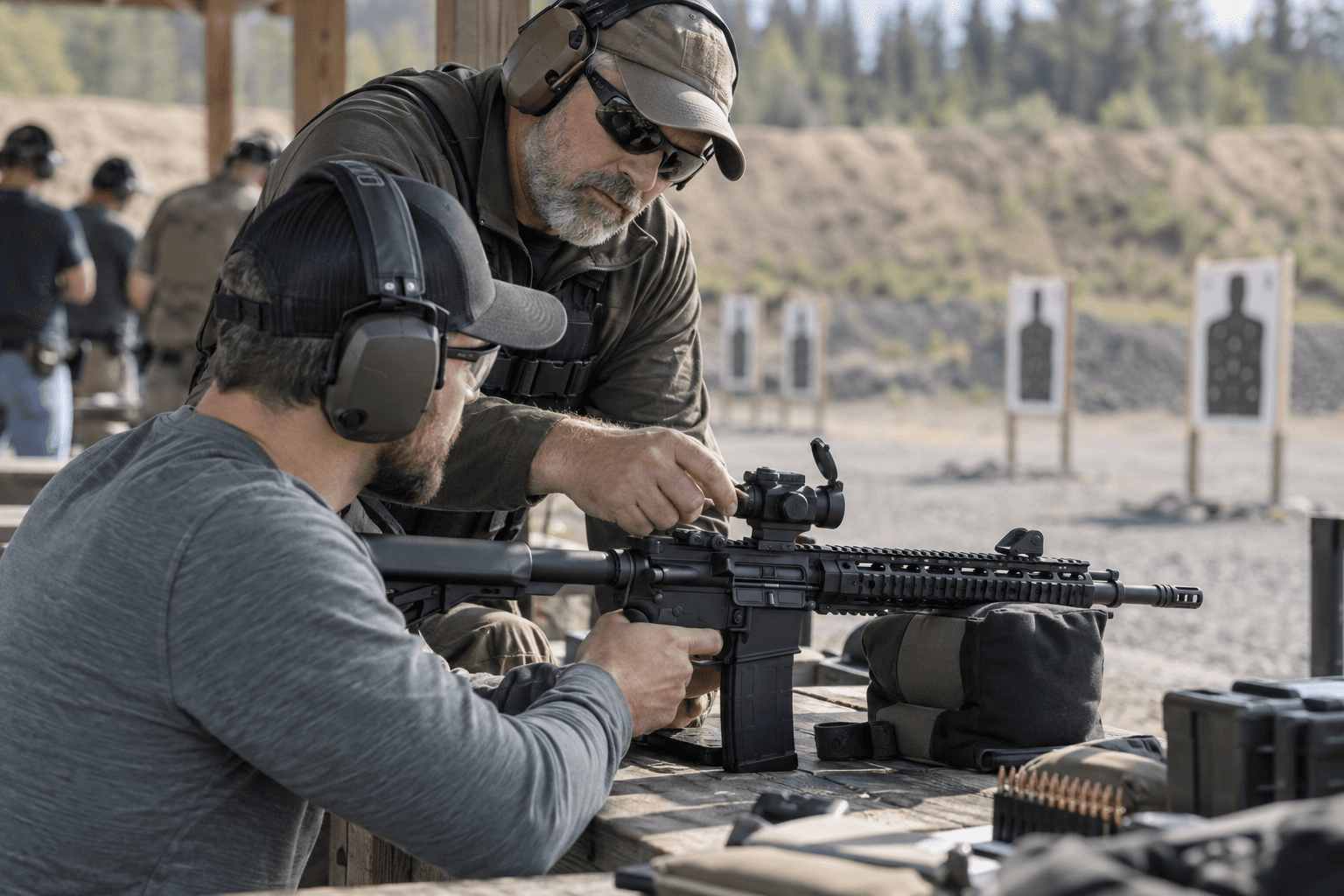
Not every problem on my range starts in the shooter's head. One student showed up with a rifle that had been checked over before class and passed clean, nothing loose, nothing flagged. As the drills pushed out to longer distances, the shooter's group started stringing horizontally, shots walking left to right instead of clustering where they should have. The first read was trigger control. It's almost always the first read, because a widening group at distance looks like a shooter jerking through the shot.
It wasn't trigger control. The optic mount had cracked sometime during the session, and the crack was letting the optic shift slightly side to side under recoil, just enough to throw the group without the shooter doing anything differently at all. No amount of coaching on trigger press was ever going to close that group. I pulled the optic off the rifle and had the shooter finish the drills on iron sights instead. I repaired the mount myself after class, back in the shop where the crack could actually be seen and fixed.
The lesson wasn't really about optics. It was about what happens when an instructor accepts the first explanation instead of chasing the real one. A shooter correcting for a trigger problem they don't have will keep making adjustments that move them further from the fix, not closer to it, and an instructor who never questions the first read will keep coaching a fault that was never there.
A shooter correcting for a trigger problem they don't have will keep making adjustments that move them further from the fix, not closer to it.
I tell new instructors one thing above everything else. Not every method works the same for every shooter, or instructor. It sounds obvious until you're standing behind a shooter whose group is drifting and you have thirty seconds to decide whether the fix belongs to the hardware or the person holding it.
Check the equipment before you correct the technique. Check the mindset before you correct the fundamentals. Most instructors default to whichever one they're more comfortable diagnosing, and that habit is how a cracked mount gets treated as a flinch, or a mindset problem gets treated as a stance issue that no amount of drilling will actually fix.
The rifle told the truth eventually. The shooter did too. Neither one told it on my schedule.
Not every method works the same for every shooter, or instructor.