
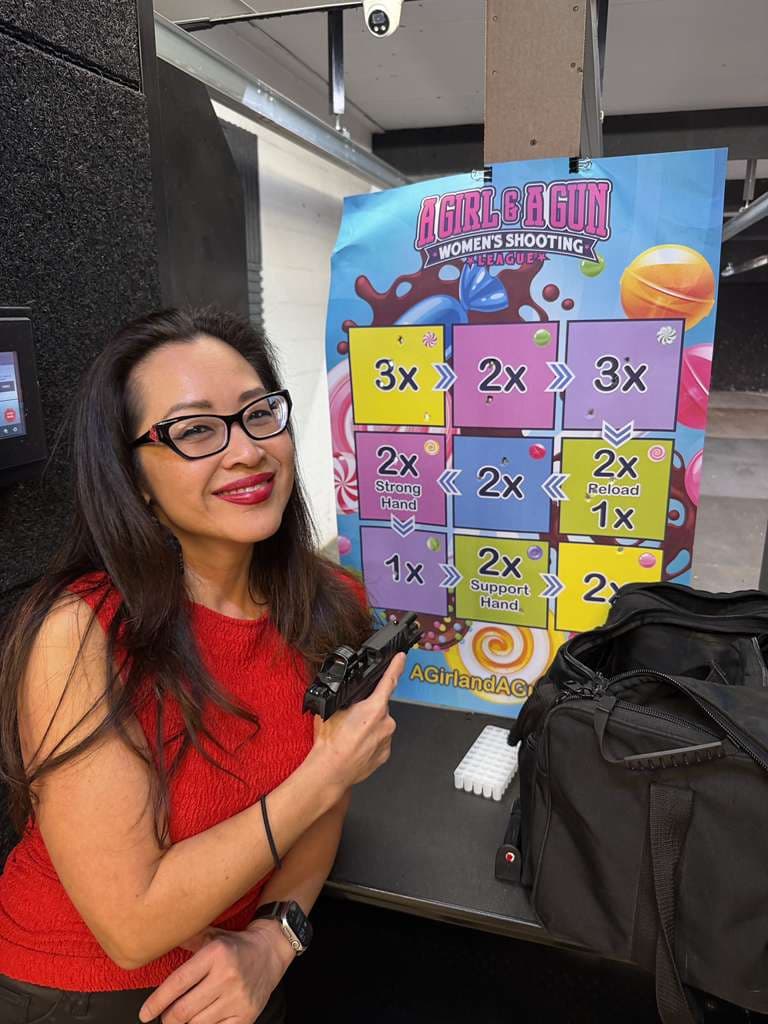
The moment the blue training gun came out for demonstration—an inert piece of molded plastic, incapable of firing—the student's breathing pattern shifted. Not the shallow, rapid breathing of general nervousness, but something deeper. Her shoulders locked upward in a defensive posture. Her hands came up instinctively, palms out, creating space between herself and the object I was holding. She was no longer in the classroom. She was in the room where her mother had been killed.
This is the diagnostic challenge that most firearms instructors are not equipped to recognize, much less address. We are trained to identify grip failures, stance problems, trigger control deficiencies. We can diagnose a flinch at fifty feet. But we consistently miss the psychological interference patterns that undermine performance before the student ever touches a loaded firearm.
In thirteen years of instruction across more than two thousand students, I have learned that the majority of shooting problems presented on the firing line are not actually shooting problems. They are manifestation points of deeper systemic breakdowns in the student's internal readiness architecture. A student whose hands are shaking uncontrollably is not experiencing a "grip strength" issue. A student whose groups scatter without pattern logic is not always fighting the mechanics—they are fighting their own nervous system's threat assessment protocols.
Fear is structural. It must be addressed structurally.
The standard instructor response to a struggling new shooter follows a predictable pattern: adjust the grip, modify the stance, check sight alignment, examine trigger press. These are mechanically sound interventions. They are also frequently irrelevant to the actual problem. When a student's autonomic nervous system has categorized the firearm as a predator rather than a tool, no amount of grip correction will produce reliable results. You cannot build precision on a foundation of panic.
What I saw in that student was not a lack of manual dexterity or coordination. It was a physiological override state. Her body had registered the firearm—even the training replica—as the instrument of her greatest trauma. Every survival protocol in her system was screaming at her to create distance, to protect herself, to escape. Asking her to "relax and focus on the front sight" in that moment would have been diagnostically useless.
This is where most instructors misread the problem. Nervousness and trauma operate on entirely different frequencies. Nervousness is the elevated heart rate of novel experience—manageable, temporary, responsive to repetition and encouragement. Trauma is a full-system alarm state that bypasses conscious control. A nervous student can be coached through their apprehension with standard methods. A traumatized student requires a fundamentally different intervention model.
The training culture default is to push through discomfort. Instructors are taught that students need to be challenged, that growth happens outside the comfort zone, that "mental toughness" separates capable shooters from those who wash out. This framework works for students whose internal systems are intact. It catastrophically fails for students operating under psychological interference conditions.
I started that student with a .22 LR. The firearm community often dismisses lighter calibers as inadequate for serious defensive training, but this reveals a failure of diagnostic thinking. The objective was not ballistic education. The objective was neurological recalibration. We needed to prove to her autonomic nervous system that she could manage the noise, the movement, the explosion—without being destroyed by it.
During her first string of fire, I did something that departs from conventional range protocol. I asked her permission, then placed my hand firmly on her upper back while she shot. This created a grounding feedback loop that I could monitor in real time. I could feel the specific quality of tension in her spine. I could track the rhythm of her breathing. I could identify the exact moment when her shoulders dropped that critical half-inch that signals a shift from defensive bracing to structural readiness.
The target never lies—but it often tells a different story than the one the instructor is reading.
That physical connection allowed her to offload some of the cognitive burden of environmental management. She was not just learning to shoot. She was rewriting the meaning of the tool itself. A firearm had been the instrument of her life's worst moment. Our mission was to transform it into an instrument of her agency, her capability, her control.
This pattern of psychological interference exists across virtually every new shooter population, even without histories of acute trauma. The cultural messaging around firearms is saturated with themes of chaos, danger, unpredictability. Students arrive on the range carrying years of absorbed narratives that tell them the object in their hands is volatile and "scary." If we do not address that foundational apprehension first, we are simply applying technical corrections to a system that is not ready to receive them.
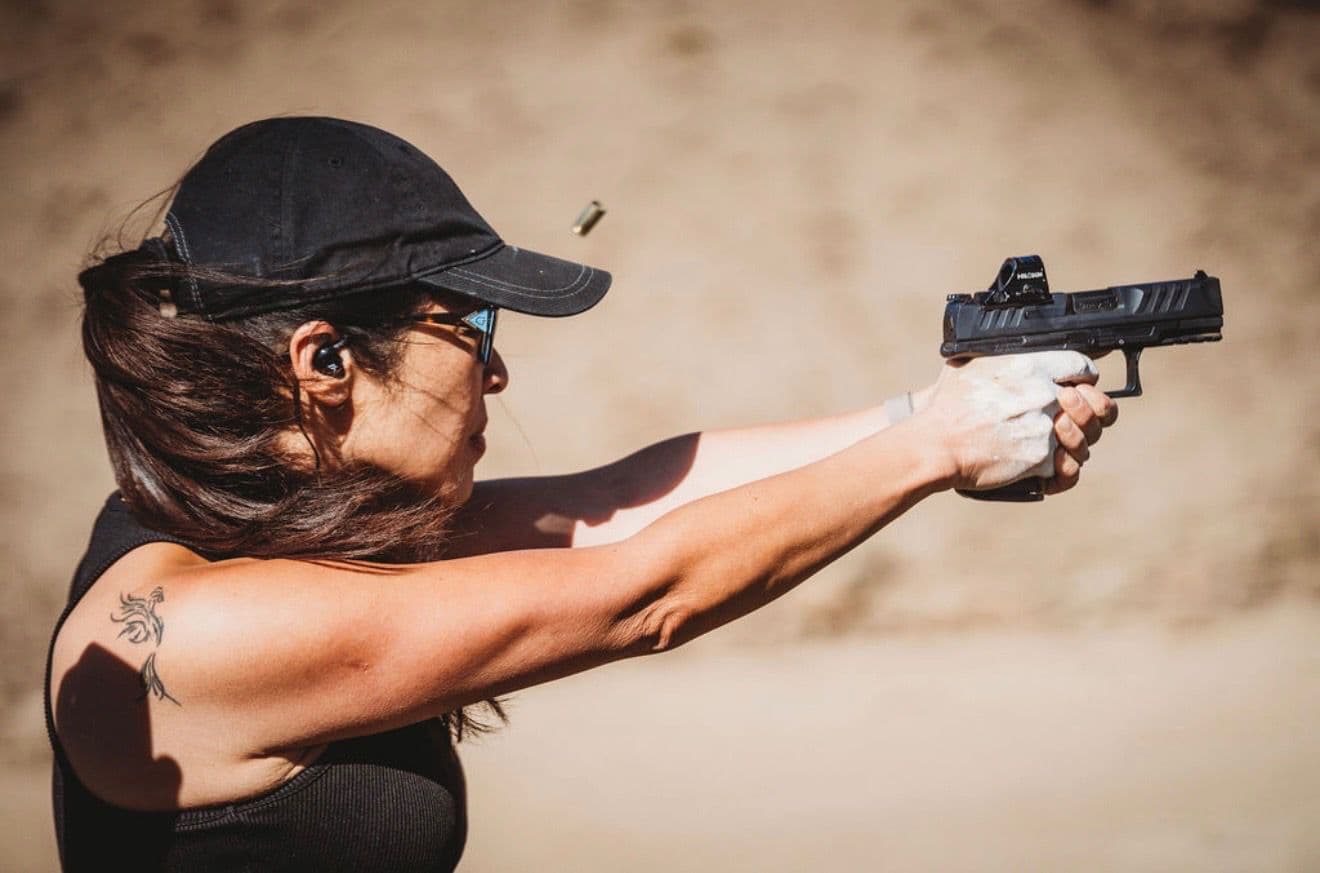
Equipment fit is a massive component of this psychological foundation that gets systematically ignored. I tell students that firearms are like shoes—if they don't fit properly, you will be distracted by the discomfort rather than focused on the task. A gun that is too heavy for the shooter's build, or has a grip circumference that prevents proper leverage, will manifest as apparent "trigger control problems" when the actual failure point is ergonomic mismatch creating mental fatigue and defensive compensation patterns.
For the student navigating her mother's death, finding the right fit meant starting with minimal recoil and working toward a platform suited to her smaller hand structure. But more importantly, it meant letting her set the pace of progression. It meant giving her permission to cry after her first shot—and then guiding her through the process until crying became confidence.
The breakthrough came when she fired her first clean group. The shift was visible across her entire posture. Her defensive crouch opened into an assertive stance. Her grip transitioned from white-knuckle survival hold to controlled pressure. She had crossed the threshold where the firearm stopped being a threat to her existence and became an extension of her will.
By the end of that eight-hour course, she posted the tightest groups in a class of eight students. Not because she had some innate marksmanship talent, but because she had navigated the most significant psychological obstacle. Once the fear was managed—once her system accepted that she was the one in control of the explosion—the mechanics became straightforward. The human body is remarkably efficient at motor learning once the survival response stops interfering with the instruction.
Safety is a felt experience before it becomes a set of rules.
This is the diagnostic framework that needs wider adoption across the training industry: watch the student more than you watch the target. Before you adjust their stance, check their breathing pattern. Before you critique their trigger press, look at their eyes. Are they making consistent eye contact or are they "checking out" mentally between strings? Is their jaw clenched in a way that signals systemic tension? Are they fighting the gun or working with it?
We have an industry full of instructors who can teach room-clearing sequences and competitive stage breakdowns. We are desperately short on instructors who understand the biomechanics of fear and the necessity of building internal readiness architecture before external mechanical platforms. We focus obsessively on the kinetic chain from feet to hands, but we ignore the fact that the chain starts in the mind.
The student who survived her mother's murder left that range with a smile I can only describe as transformative. She did not just learn to shoot. She reclaimed a part of herself that had been locked away by fear for years. That is the highest level of instruction—not producing a score on a qualification target, but facilitating the moment where a student realizes they are capable of controlling something that once controlled them.
The elation is real. The pattern repeats. Students who overcome that initial fear barrier often return for advanced training. Many join communities like A Girl & A Gun, where they continue developing their skills in supportive environments. They become the kind of practitioners who help guide others through the same journey they once walked.
The mechanics come after. The psychological foundation has to come first. If the person behind the sights is in a state of internal collapse, no amount of technical correction will produce lasting capability. We are not just teaching people to operate firearms. We are building confident, capable humans who trust themselves under pressure.
Before you fix the grip, fix the fear. Everything else follows.