
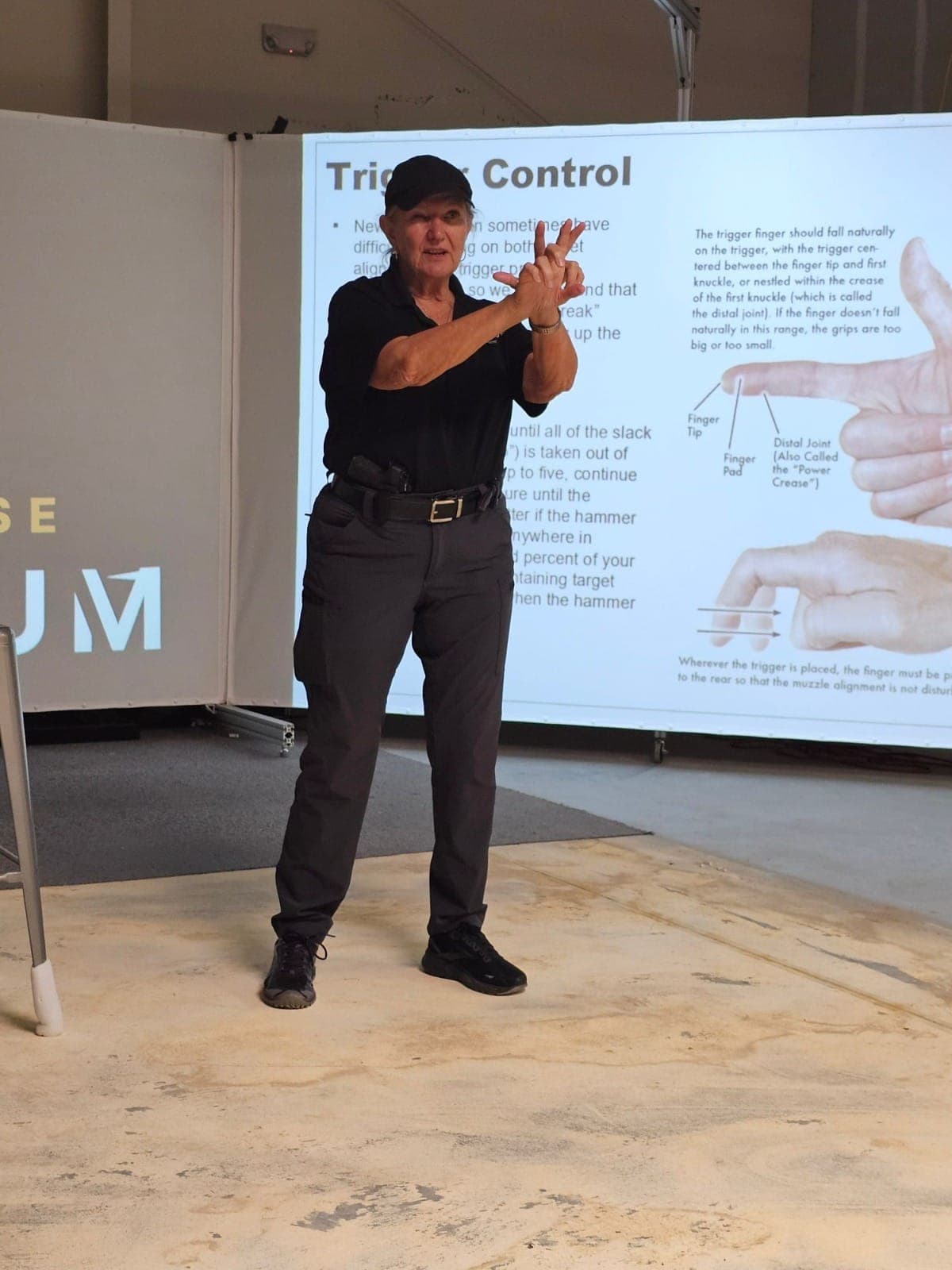
He was absolutely certain the sights were off.
The student standing on the line in front of me had been shooting consistently low and to the left for the better part of our session, a pattern as familiar to a firearms instructor as a bad grip or a flinched trigger press. I'd walked through the correction methodically — talked through the mechanics of grip pressure, explained the role the support hand plays in controlling muzzle movement, described how a right-handed shooter who over-grips with the firing hand and anticipates the recoil will almost always push shots in exactly that direction. I told him to slow down, focus on the front sight, and press the trigger until his finger finished flat. He nodded. He adjusted. He fired.
Low and left.
He looked at me and said, with complete sincerity, that he was doing exactly what I'd described. The problem, he explained, was clearly the sights. The gun was off. I had been teaching long enough to know that the real conversation had not yet begun.
This moment is not unusual. Any instructor who has spent significant time on the line will recognize it — not as a problem of marksmanship, but as a problem of perception. The student was not lying or being obstinate. He genuinely could not see what was happening in his hands in the half-second between decision and detonation. Explanation, no matter how precise or well-reasoned, was never going to bridge that gap. He needed to see it.
I asked if I could fire the gun myself. I loaded the magazine with a dummy round followed by a live round—ensuring the live round would be the first to chamber in a sequence he wasn't told about. When I stepped to the line, my first shot hit dead center. I handed the gun back.
When the student pressed the trigger on the dummy round and the gun didn't fire—no bang, no recoil, just the quiet click of the hammer falling on an inert cartridge—his muzzle dipped noticeably toward the berm before his trigger finger had even finished its travel. He stood there for a moment looking at the gun in his hands as if it had said something unexpected. The flinch he had been insisting he didn't have had just introduced itself. I didn't need to say another word. He turned to me and nodded.
That's where the demonstration earns its keep. The dummy round doesn't just reveal the flinch — it creates an undeniable moment that the student's own hands have authored.
The live-round/dummy-round drill is not new. Instructors have been using it for decades precisely because it works in situations where verbal instruction reaches its ceiling. But the reason it works is worth understanding carefully, because that understanding changes how you deploy it and when.
When a student anticipates recoil, what is actually happening is a pre-programmed neurological response. The brain has learned, correctly, that a loud noise and sharp kick are coming. In the milliseconds before the shot breaks, the central nervous system begins preparing the body to absorb the event — and in doing so, it disrupts the very stillness required to send a bullet where you want it to go. The student isn't gripping too hard or flinching because he's undisciplined. He's doing it because his brain is working exactly as it's supposed to. The correction isn't a matter of willpower. It's a matter of re-education, and re-education requires the student to first believe that the problem exists.
The Gap Between Knowing and Seeing
I spent years in public education before I came to firearms instruction, and the single most durable lesson from that career is something my students on the range keep teaching me all over again: people don't learn the same way. That sounds like an obvious statement. It isn't. Most of us, when we become instructors, default to explaining things the way we ourselves would want to be taught. We talk through problems. We use analogies. We build logical cases. And for a portion of students, that works beautifully.
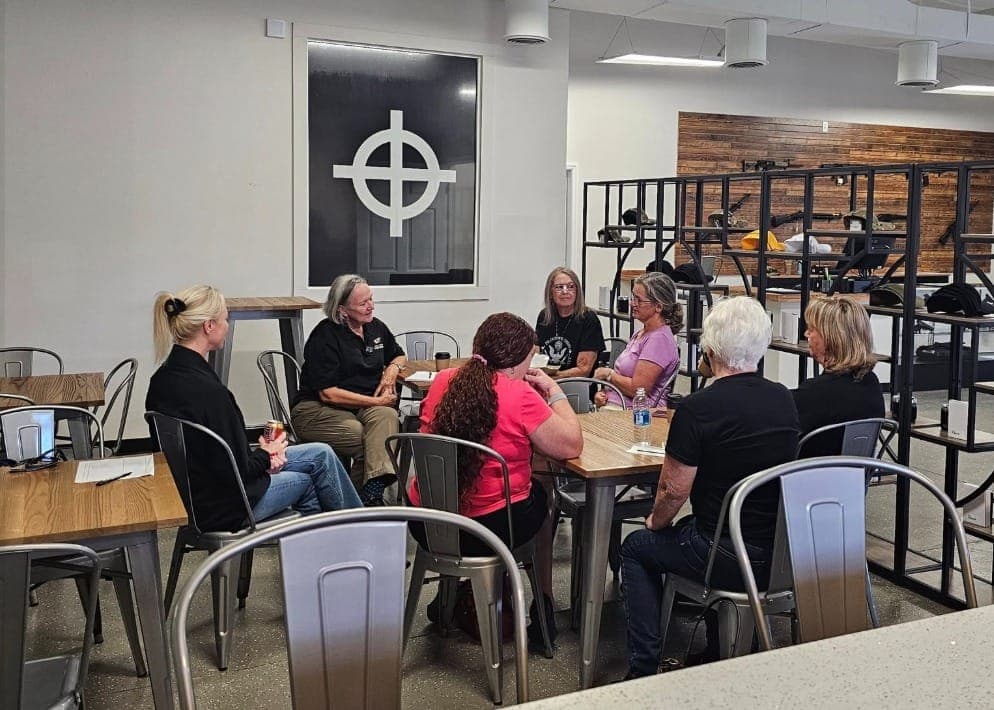
But auditory learners are only part of the classroom. A significant number of students need to see something happen — visually, concretely, right in front of them — before the information becomes real. And another segment needs to feel it, to experience the physical reality of a correction in their own hands before the knowledge travels from intellectual understanding into actual skill. If you are teaching exclusively through explanation, you are reaching your auditory learners and leaving the others behind. They won't always tell you. They'll nod. They'll say they understand. And then they'll keep shooting low and to the left.
This is not a flaw in the student. It is a gap in the instructor's approach.
The student who insisted the sights were off wasn't being difficult. He was telling me the truth about his own experience as best he could. From inside his grip, inside his trigger press, nothing felt wrong. He couldn't perceive the anticipatory flinch because it was happening below the threshold of his conscious attention. When I shot the gun and hit center, and when he fired the dummy round and watched his own hands betray him, that gap closed in a way that no amount of explanation could have managed. The problem stopped being theoretical and became something he had witnessed firsthand.
There is also something worth naming about the dynamic of having the instructor shoot the student's own gun. When I put my shot center and his landed low, the variable of the equipment was removed from the conversation quietly, without confrontation. He had theorized the sights were off. The shot I fired answered that theory without me having to argue against it. That matters. Students who feel argued out of a position often dig in; students who simply watch the evidence remove a variable tend to move on. The demonstration did what the debate could not.
What followed — the adjustment, the encouragement, the gradual correction of his shots as he learned to trust a slower, more deliberate press — happened at a pace that would not have been possible five minutes earlier. He had needed that moment of undeniable proof before he could become a willing participant in fixing the problem. Once he had it, the rest of the coaching was simply patience and repetition.
I see this pattern persistently across the range, not just in new shooters but in experienced ones. Students arrive with a mental model of what they're doing, built from previous training, online content, or simply from years of practice without much diagnostic feedback. When something in their performance doesn't match that mental model, the first instinct is almost always to look for an external cause — the equipment, the ammunition, the conditions. The instinct is understandable. It's also, in the majority of cases, incorrect.
As instructors, our job is not to win that argument. Our job is to create the conditions under which the student can discover the truth themselves.
As instructors, our job is not to win that argument. Our job is to create the conditions under which the student can discover the truth themselves. The best diagnostics I've encountered, in martial arts training, in the classroom, and on the range, are the ones that remove the option of the wrong explanation rather than insisting on the right one. When you shoot the gun and hit center, you aren't telling the student the sights are fine — you're showing them. When they press through the dummy round and feel their hands jump, they aren't being told they have a flinch — they're experiencing it. The knowledge that arrives through experience tends to stick in a way that the knowledge delivered through instruction sometimes doesn't.
For instructors looking at their own curriculum and methodology: take inventory of how much of your teaching relies on verbal instruction versus demonstration versus hands-on kinesthetic experience. If the balance is heavily weighted toward explanation, consider where the gaps might be forming. The students who are nodding along but not improving are often the ones who need something different — not a clearer explanation, but a different kind of evidence. A dummy round in the magazine. A drill that makes the problem visible. A moment on the line that does what words cannot.
The student who insists the sights are off is not your most resistant student. He's often your most coachable one — once you give him the right kind of proof. His certainty isn't the obstacle. It's the invitation. Find the demonstration that shows him what explanation couldn't, and he'll do the work himself.