
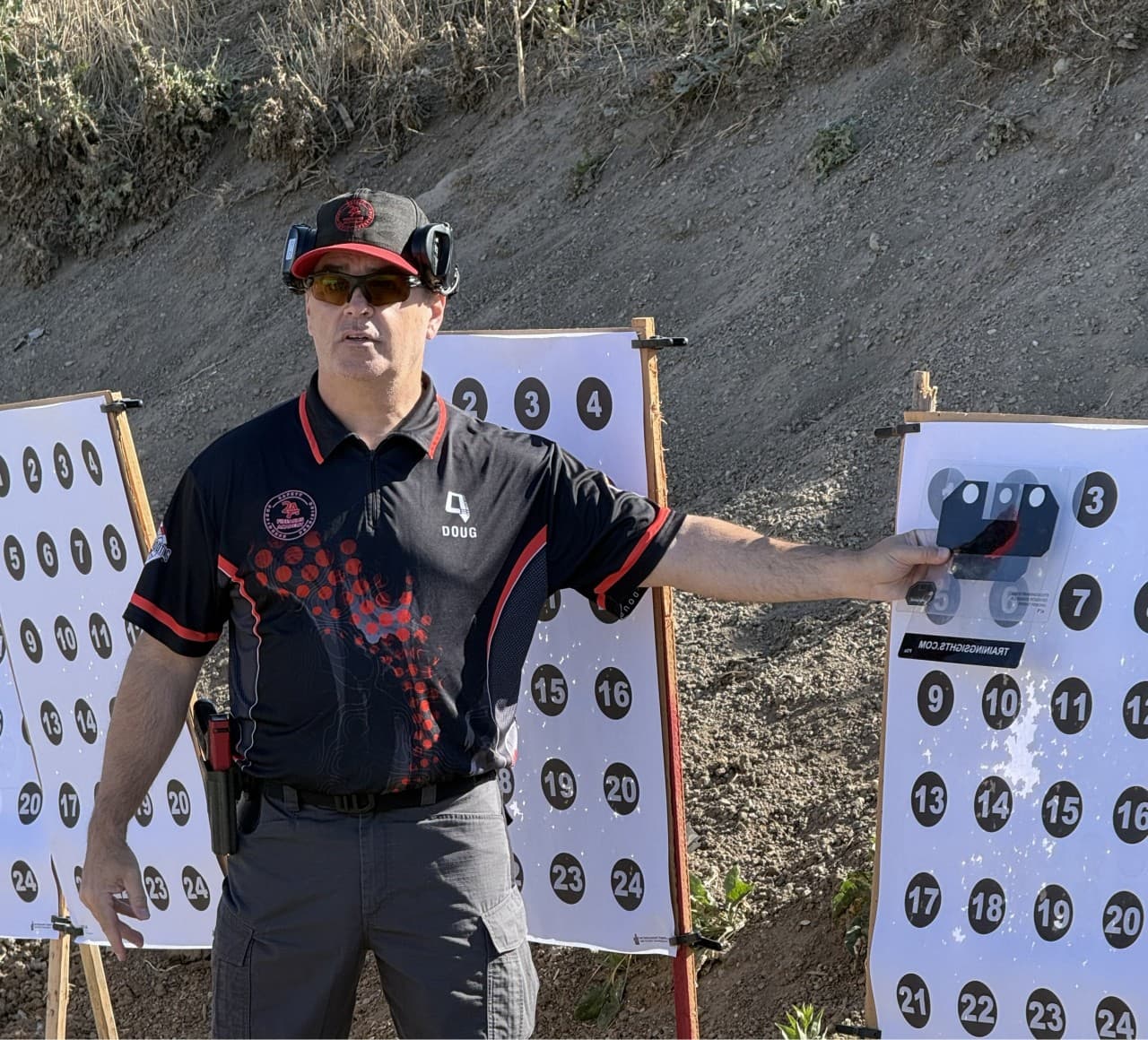
A student in one of our initial CCW classes stopped mid-course and said he wasn't sure he wanted to finish. He hadn't grasped the weight of what he was signing up for until he sat in that room. That moment stuck with me for a different reason than most people would expect. It wasn't about the license. It was about how little a person can understand about themselves under a new kind of pressure until someone puts them in front of it.
I see a version of that moment on the range constantly. A shooter who understands grip, sight alignment and trigger control on paper still falls apart the second the target starts keeping score. The breakdown rarely looks like ignorance. It looks like tension nobody named yet.
Hands can look correct and still be wrong. A student's firing-hand grip is strong while the support hand barely presses at all. Or the whole body locks a half second before the shot breaks. The target shows the result. The problem starts earlier.
I watch the eyes and the breathing. A shooter anticipating recoil holds a breath without noticing. Someone rushing to pass a qualification stops performing the process and starts performing for a score.
The target tells you what happened. It does not tell you why.
Telling a student to shoot better fixes nothing. Find the specific breakdown, name it in language the student understands, then confirm they can repeat the correction on their own.
THE DIAGNOSIS THAT WASN'T
That question what a person doesn't know about themselves until pressure tests it came back a few months later with a student whose shots kept dropping low.
From the bench it read as a textbook recoil flinch. Watching closer, the reaction started before the gun ever fired. Held breath, tight shoulders, a trigger forced the instant the sights looked perfect.
Fear of recoil wasn't the cause. Self-imposed pressure to produce a perfect shot was.
The standard fix didn't touch it. Strengthen the grip. Focus on the front sight. Press the trigger slower. Fine fundamentals, all repeated already, and repeating them again only tightened the pattern. Grip harder, shoulders more rigid, more overthinking on the press. The student had already been told not to anticipate and not to jerk the trigger. Every additional instruction gave them one more thing to consciously control, and control was the problem.
ONE CUE, NOT FIVE
We stopped talking about the target. Fewer instructions, not more. One task: let the sights move naturally, hold steady pressure, don't decide when the shot breaks. Don't make the gun go off give it permission to go off.
Do not decide when the gun fires.
We brought the target closer, dropped any mention of score or group size, and fired one deliberate round at a time. Lower the firearm. Reset the breath. Rebuild the grip. Start again. Tension stopped carrying from one shot into the next.
The student had been waiting for a perfect sight picture and forcing the shot before it disappeared. Once they stopped trying to command the exact instant of ignition, the sudden movement went away.
The first change wasn't on paper. Shoulders relaxed. Breathing evened out. The student stopped rushing the trigger the moment the sights crossed center, and stopped flinching internally after every shot as if they'd already failed.
Then the target caught up. The low shots disappeared. The group tightened. More important, it repeated. Not one clean shot buried in four forced ones. The same process, round after round.
The confidence that followed wasn't the kind that comes from an instructor saying good shot. It came from a student who understood why the shot worked and could produce it again without being told. By the end, they'd stopped asking where every round landed and waiting for reassurance after each string. They could feel a rushed trigger on their own, reset, and correct it without me saying a word.
This shows up often, and not only with beginners. New shooters chase a perfect shot. Experienced shooters carry frustration or pressure to perform at a level they've already decided they should be at. Low shots, tight grip, rushed presses. The label on the symptom changes. The root doesn't: the student is managing the result instead of running the process. I see it across training contexts, too. During qualification, students fixate on passing. In defensive or practical training, they rush because they think speed is the goal. Even in dry practice, the same pattern shows up when someone tries to make every rep look perfect instead of paying attention to what their hands, eyes, and body are actually doing.
It usually comes down to the same thing: too much running through a shooter's head at once grip, sights, trigger, recoil, the clock, the score, what the instructor is thinking. Eventually that load turns into tension and an anticipatory jerk.
A low shot becomes you flinched. A wide group becomes your grip is weak. Sometimes true, often just a description of the symptom. The student then tries to consciously manage even more parts of the shot, and the tension gets worse, not better. What gets missed is timing and intent: when does the movement start, and what is the shooter trying to make happen at that instant.
I stopped diagnosing off the target alone a long time ago. Watching the whole sequence, not just the paper at the end of it, means asking what the student was reacting to instead of reaching for a mechanical fix that only treats what's visible.
Two students can produce the identical low shot for opposite reasons. One is anticipating recoil. One is forcing the trigger the moment the sight picture looks right. A new instructor's most common mistake is correcting before understanding which one they're looking at.
Watch the breathing, the eyes, the shoulders, the hands, the pace, before and after the shot. Then give one correction aimed at the cause, not five aimed at the symptom.
Students don't need an instructor who impresses them. They need one willing to actually watch them. The longer I teach, the more I catch myself reaching for a familiar correction before confirming it's the right one. My pet peeve is an instructor who repeats the same correction louder, with more technical language, and decides the student isn't listening. Usually the student is listening fine. The instruction just isn't addressing what's actually happening in front of him.
The best instructors I've worked with don't carry the most drills or the biggest vocabulary. They notice when the student in front of them needs something different, and they're secure enough to change course instead of repeating themselves louder. That starts with one habit: watch before you correct.
In many cases, the wrong fix is more instruction, not less.